
vip@mingyuforklift.com
+86-0535-2090977

Introduction
Diesel forklifts remain the workhorses of material handling operations worldwide, prized for their raw power, durability, and fuel efficiency in demanding environments. Unlike their electric or LPG counterparts, diesel-powered forklifts generate substantial torque at low RPMs, making them ideal for outdoor applications, heavy lifting, and continuous operation in construction sites, lumber yards, shipping terminals, and manufacturing facilities. However, mastering diesel forklift operation requires understanding unique characteristics including cold-start procedures, emission control systems, hydraulic operations, and specific safety protocols. This technical guide provides operators with the essential knowledge to operate diesel forklifts safely, efficiently, and in compliance with occupational safety standards.
Pre-Operational Inspection and Preparation
Before engaging the ignition, a thorough pre-operational inspection is mandatory. Diesel forklifts require specific checks beyond standard equipment verification. Begin by examining the fuel system—check diesel levels and inspect fuel lines for cracks, leaks, or deterioration. Diesel fuel contamination is a leading cause of engine failure; ensure water separators are drained if equipped. Verify engine oil levels using the dipstick; diesel engines typically require 15W-40 oil for optimal viscosity across temperature ranges.
Inspect the cooling system carefully. Diesel engines operate at higher compression ratios than gasoline engines, generating significant heat. Check coolant levels in the reservoir and radiator, examining hoses for bulging, cracking, or loose clamps. A diesel engine overheating can cause catastrophic head gasket failure or cylinder head warping.
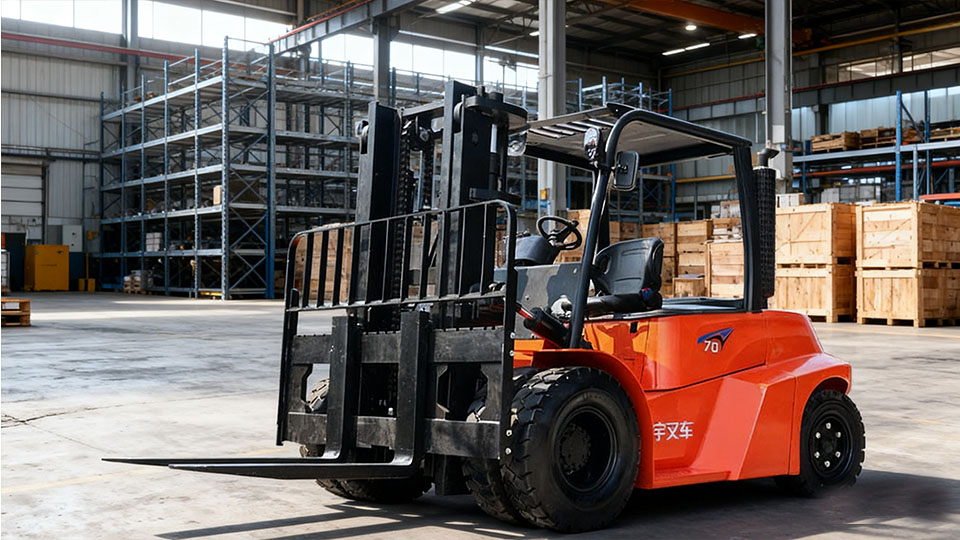
Battery condition is critical for cold starting. Diesel engines require high cranking amps, particularly in temperatures below 40°F (4°C). Test battery voltage—it should read 12.6 volts or higher. Clean terminal corrosion and ensure cable connections are tight. Examine the air filter indicator; diesel engines consume massive air volumes, and restricted airflow reduces power while increasing fuel consumption and emissions.
Tire inspection deserves special attention. Diesel forklifts often operate on rough terrain with pneumatic tires. Check tread depth, sidewall damage, and proper inflation. Solid pneumatic tires should show no chunking or separation. Verify that all lug nuts are present and properly torqued.
Finally, inspect the hydraulic system. Check hydraulic oil level in the sight glass or dipstick. Examine lift chains for wear, proper lubrication, and equal tension. Test all controls for free movement and proper return-to-neutral function.
Cold Start Procedures
Diesel engines fundamentally differ from spark-ignition engines in their starting requirements. Compression ignition requires sufficient heat generation through air compression, making cold starts challenging. Modern diesel forklifts incorporate glow plugs or intake air heaters to facilitate starting.
For engines with glow plugs, turn the ignition key to the "ON" position without cranking. The glow plug indicator lamp (typically coil-shaped) will illuminate. Wait until the lamp extinguishes—this indicates the combustion chambers have reached adequate temperature, usually 10-30 seconds depending on ambient temperature. In sub-freezing conditions, a second glow cycle may be necessary. Never crank the engine for more than 30 seconds continuously; allow two-minute cooling periods between attempts to prevent starter motor damage.
Intake air heater systems operate differently. The wait-to-start lamp indicates when the intake air has been preheated. Some systems activate automatically when the key turns to "START," while others require a separate button.
Once started, allow the engine to idle for 3-5 minutes before operating. This warm-up period circulates oil to critical components, allows hydraulic fluid to reach operating viscosity, and enables the engine management system to stabilize. Operating immediately after starting causes accelerated wear on pistons, rings, and bearings due to cold oil and incomplete combustion.
Observe exhaust smoke during start-up. Brief white smoke indicates unburned fuel and is normal in cold conditions. Persistent white smoke suggests coolant entering combustion chambers. Black smoke indicates over-fueling or air restriction. Blue smoke signals oil burning—potentially worn piston rings or valve seals.
Basic Operating Controls
Diesel forklift control configurations vary by manufacturer, but standard layouts include several universal elements. The directional control lever, typically located to the operator's left, selects forward, neutral, or reverse. Some models feature column-mounted selectors or electric switches.
The accelerator pedal controls engine RPM, directly affecting hydraulic pump speed and travel speed. Unlike automotive applications, diesel forklift throttles are often "dead pedal" style—spring-return to idle when released. This design enhances safety and fuel economy.
The inching pedal (or brake pedal on some designs) serves dual functions. Partial depression disengages the transmission while maintaining engine speed for hydraulic operations—essential for precise load positioning. Full depression applies service brakes. Mastering inching technique separates novice operators from professionals.
Hydraulic controls operate the mast functions. The standard configuration includes: lift (raise/lower), tilt (forward/backward), and sideshift (if equipped). Some models feature fourth functions for attachments like paper roll clamps or rotators. Controls may be mounted on a lever console, integrated into the seat armrest, or configured as fingertip joysticks on modern machines.
The parking brake is typically a hand-operated lever or electric switch. Always engage parking brake when stationary, as diesel forklifts lack transmission "park" positions. Some models feature automatic parking brake engagement when the operator exits the seat.
Driving and Maneuvering Techniques
Diesel forklift operation requires understanding rear-wheel steering characteristics. Unlike automobiles, forklifts pivot on the rear axle, causing the rear to swing wide during turns. The counterweight extends beyond the rear wheels, creating significant tail swing that can strike obstacles, racking, or personnel. Always allow extra clearance when turning—rule of thumb: if your rear wheels clear an object by three feet, your counterweight clears it by inches.
Travel speed must match conditions. Diesel forklifts can achieve 12-18 mph unladen, but speed should never compromise stability or control. Reduce speed when: carrying elevated loads (never travel with load more than 6 inches above ground), turning, operating on inclines, crossing dock plates, or in congested areas.
Load engagement requires methodical approach. Position the forklift squarely facing the load with mast vertical. Adjust fork width to match pallet openings—typically 70% of pallet width for stability. Slowly approach until forks are fully inserted, then tilt mast back slightly before lifting. This "pinches" the load against the carriage, preventing spillage during initial lift.
When traveling with loads, keep the load tilted back sufficiently to prevent forward sliding, but not so far that rearward stability is compromised. The combined center of gravity must remain within the stability triangle formed by the front drive tires and rear steer axle pivot point. Elevating loads shifts the center of gravity forward and upward, dramatically reducing stability.
Grade operation presents unique challenges. Always ascend and descend grades with the load upgrade—driving forward uphill, backward downhill. This positions the heavy drive axle and load at the lower end, maintaining stability. Never turn on grades or operate across slopes, as lateral stability is severely compromised.
Hydraulic System Operation
Diesel forklifts utilize engine-driven hydraulic pumps to power mast functions. Pump output is proportional to engine RPM—higher speeds generate faster lift and tilt rates. However, excessive speed reduces precision and increases shock loading on components.
Master the "feathering" technique: using minimal throttle with precise hydraulic lever control for smooth, controlled movements. Jerky operation indicates excessive speed or abrupt control inputs. Smooth operation extends component life and prevents load damage.
Understand hydraulic relief valves. When maximum pressure is reached (typically 2,500-3,000 PSI), relief valves open to prevent system damage. Continuous operation against relief—holding controls at maximum extension—generates excessive heat, degrading hydraulic oil and damaging seals. Avoid prolonged relief valve activation.
Load lowering is gravity-assisted, controlled by hydraulic metering valves. The lowering valve regulates descent speed regardless of load weight. If lowering feels uncontrolled or too rapid, the valve may require adjustment or the load exceeds rated capacity.
Shutdown Procedures
Proper shutdown extends diesel engine life and prevents maintenance issues. Never shut down immediately after high-load operation. Allow 3-5 minutes of idle operation to normalize temperatures—turbocharged engines particularly require cool-down periods to prevent oil coking in bearing housings.
Lower forks completely to the ground. This relieves hydraulic system pressure and prevents accidental lowering. Engage the parking brake firmly. Turn ignition to "OFF" and remove the key.
Post-operation checks include: inspecting for fluid leaks that developed during operation, checking tire damage, and noting any performance anomalies for maintenance reporting. Document operating hours for scheduled maintenance tracking.
Emissions and Environmental Considerations
Modern diesel forklifts incorporate emissions control technologies including diesel oxidation catalysts (DOC), diesel particulate filters (DPF), and selective catalytic reduction (SCR) systems. Operators must understand regeneration cycles.
DPF regeneration burns accumulated soot at high temperatures. Passive regeneration occurs during normal high-temperature operation. Active regeneration injects extra fuel to raise exhaust temperatures. Some systems require parked regeneration—operators must initiate manual cycles when indicators illuminate. Interrupting regeneration causes DPF clogging and expensive repairs.
SCR systems require diesel exhaust fluid (DEF)—a urea solution that reduces NOx emissions. Monitor DEF levels; running empty triggers derate modes limiting engine power. Use only certified DEF to prevent catalyst damage.
Operate diesel forklifts in well-ventilated areas. Even with emissions controls, diesel exhaust contains particulates and gases hazardous with prolonged exposure. Indoor operation requires adequate ventilation, exhaust scrubbers, or limited duration exposure.
Safety Protocols and Best Practices
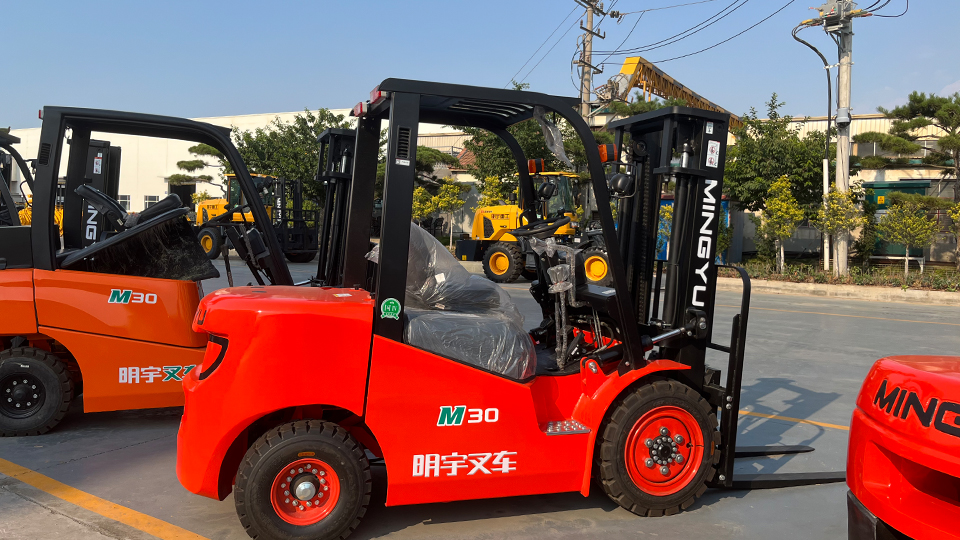
Diesel forklift operation demands constant situational awareness. The rear-mounted engine creates significant blind spots directly behind the machine—areas impossible to see from the operator position. Always sound the horn when approaching intersections, blind corners, or exiting aisles. Use spotters when reversing in confined areas or when loads obstruct forward vision.
Maintain three points of contact when mounting/dismounting. Diesel forklifts often have high ground clearance requiring substantial step-up. Face the machine, use handholds, and never jump from the operator compartment.
Understand stability limitations. The "stability triangle" concept is fundamental—load center, load height, and travel dynamics must keep the combined center of gravity within the front drive axle to rear pivot line triangle. Exceeding rated capacity, elevating loads while traveling, or sharp turns with raised loads can cause tip-overs. In tip-over events, brace against the steering wheel, lean away from impact direction, and never attempt to jump.
Personal protective equipment is mandatory: hard hats, safety footwear with reinforced toes, high-visibility vests in traffic areas, and hearing protection in high-noise environments. Seat belts must be worn—diesel forklifts lack ROPS (roll-over protective structure) enclosures in many configurations, and seat belts prevent ejection during tip-overs.
Maintenance Awareness for Operators
While maintenance technicians handle repairs, operators serve as the first line of defense through daily observations. Report immediately: unusual engine noises (knocking, rattling), excessive exhaust smoke, hydraulic leaks, erratic transmission behavior, brake fade, or mast drift (slow lowering when controls are neutral).
Monitor fuel consumption trends. Sudden increases indicate engine problems, brake drag, or hydraulic issues. Keep the fuel tank above one-quarter full—diesel fuel cools and lubricates the injection pump; low fuel levels accelerate wear.
Maintain cleanliness. Diesel engines attract dust and debris. Blow out radiator fins regularly to prevent overheating. Keep the operator compartment free of debris that could interfere with controls.
Conclusion
Operating a diesel forklift effectively combines technical knowledge, practiced skills, and safety consciousness. These powerful machines demand respect for their capabilities and limitations. Proper pre-operational inspection, adherence to cold-start protocols, mastery of hydraulic controls, and situational awareness during operation ensure productive, safe material handling. As emissions regulations tighten and technology advances, diesel forklifts continue evolving—operators must commit to ongoing education and adherence to manufacturer-specific guidelines. With proper training and disciplined operation, diesel forklifts provide years of reliable service in the most demanding material handling applications.
Name: selena
Mobile:+86-13176910558
Tel:+86-0535-2090977
Whatsapp:8613181602336
Email:vip@mingyuforklift.com
Add:Xiaqiu Town, Laizhou, Yantai City, Shandong Province, China
