
vip@mingyuforklift.com
+86-0535-2090977

Introduction
Forklift operator certification represents a critical credential in the modern industrial workforce, serving as both a legal mandate and a professional competency standard. With over 855,000 forklifts operating in U.S. industries and nearly 100 worker fatalities occurring annually in forklift-related incidents , the Occupational Safety and Health Administration (OSHA) maintains stringent certification requirements under 29 CFR 1910.178. This regulation mandates that only trained and authorized operators may operate powered industrial trucks, with employers bearing legal responsibility for ensuring compliance .
Whether you're entering the logistics sector, seeking career advancement in warehousing, or transitioning from general labor to skilled equipment operation, understanding the certification pathway is essential. This technical guide provides a systematic examination of eligibility requirements, training methodologies, evaluation protocols, and career implications for aspiring forklift operators.
Regulatory Framework and Legal Requirements
OSHA's Three-Component Training Standard
OSHA's powered industrial truck standard establishes three non-negotiable training components that form the foundation of legitimate certification :
1. Formal Instruction (Classroom or Online) Comprehensive education covering OSHA regulations, operational principles, and hazard recognition. This component establishes the theoretical knowledge base required for safe operation.
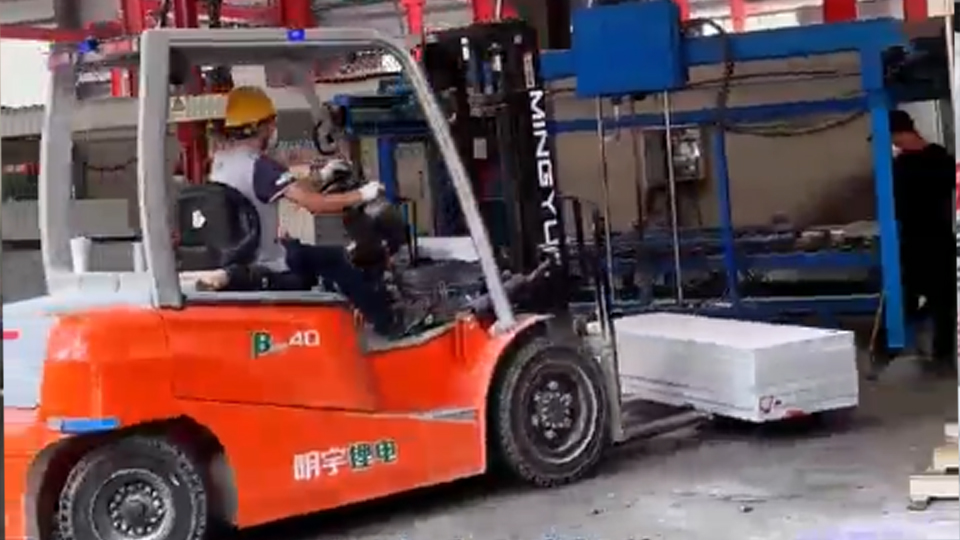
2. Practical Training (Hands-On Demonstration) Supervised operation under the direct guidance of a qualified instructor. Trainees must demonstrate competency in actual equipment operation in a controlled environment.
3. Performance Evaluation (Workplace Assessment) Final evaluation of the operator's capability to perform assigned duties safely in the actual workplace environment. This employer-conducted assessment verifies real-world competency.
Critically, OSHA emphasizes that no single training method is sufficient—certification requires integration of all three components . Online-only programs or brief "certification cards" without practical evaluation violate federal standards and expose employers to significant liability.
Certification vs. Licensing: Understanding the Distinction
Unlike commercial driver's licenses or professional trade certifications, forklift operator credentials operate under a unique framework:
No Federal License Exists: OSHA does not issue or maintain forklift operator licenses
Employer-Based Certification: Employers issue certificates of competency following compliant training
National Reciprocity: Valid certification from any employer is recognized nationwide, though equipment-specific training may be required for new assignments
Three-Year Validity: Certification expires every three years, with mandatory retraining following accidents or unsafe operation observations
This employer-based system means that technically, you cannot be "self-certified"—legitimate credentials require employer sponsorship and evaluation, even when third-party training providers deliver instruction.
Eligibility Requirements and Prerequisites
Baseline Qualifications
Before pursuing certification, candidates must meet fundamental eligibility criteria :
Age Requirement: Minimum 18 years for operation in general industry. Federal law prohibits minors under 18 from operating forklifts in non-agricultural employment, with limited exceptions for agricultural settings (minimum 16 years with proper training) .
Physical and Mental Capability: Operators must possess:
Adequate vision and hearing (corrective devices permitted)
Physical stamina for extended operation
Coordination and reflexes sufficient for safe control
Mental alertness and ability to respond to hazards
Language Proficiency: Sufficient comprehension of English (or workplace language) to understand safety instructions, warning signs, and operational manuals .
Educational Background: While OSHA doesn't mandate specific education levels, most employers require high school diploma or equivalent. Mathematical competency for load calculations is essential.
Notable Exclusions
Driver's License Not Required: Unlike common misconception, operating a motor vehicle is not a prerequisite for forklift certification. Forklift operation and automobile driving require distinct skill sets, and many certified forklift operators do not hold driver's licenses .
Prior Experience Not Mandatory: Entry-level candidates may pursue certification without previous equipment operation experience, though mechanical aptitude and spatial reasoning abilities facilitate training success.
Training Pathways and Provider Selection
Pathway 1: Employer-Sponsored Training
Optimal for: Currently employed individuals, new hires in logistics/warehousing, career advancement within existing companies.
Structure:
Cost: Usually free for employees; employers invest $100–$300 per operator for external programs
Duration: 1–3 days depending on equipment complexity and operator experience
Advantages: Equipment-specific training on actual workplace machinery; integration with company safety protocols; immediate employment application
Implementation: Employers may use internal qualified trainers or contract third-party providers
Train-the-Trainer Programs: Many organizations maintain certified in-house instructors through OSHA's "qualified trainer" provisions, enabling ongoing internal certification capabilities .
Pathway 2: Third-Party Training Providers
Optimal for: Job seekers, career changers, individuals requiring flexible scheduling, or those seeking neutral-ground certification.
Community Colleges and Trade Schools:
Cost: $100–$300 per person
Duration: 4–8 hours classroom plus 1–2 days hands-on training
Curriculum: Standardized instruction covering OSHA 1910.178, equipment operation, load handling, and safety protocols
Certification: Provides training documentation; requires employer evaluation for full certification
Specialized Training Facilities: Organizations like the National Forklift Foundation, Forklift Academy, and regional OSHA Training Institute Education Centers offer intensive programs with dedicated equipment fleets .
Pathway 3: Online Training Programs
Optimal for: Experienced operators needing recertification, individuals seeking flexible theoretical instruction, or preliminary training before practical evaluation.
Reputable Providers:
National Forklift Foundation: $50–$100, self-paced 1–2 hour programs, immediate certificate generation
OSHA.com: Equipment-specific tracks for stand-up, sit-down, and specialized lift trucks
Forklift Academy: Online, in-person, and hybrid options with financial assistance partnerships
Critical Limitation: Online training satisfies only the formal instruction component. OSHA explicitly requires employer-conducted practical training and evaluation—online-only certification is non-compliant . Legitimate online programs provide:
Theoretical foundation and written examination
Training documentation for employer verification
Printable wallet cards and certificates
Requirement: Employer must complete hands-on evaluation before operation authorization
The Certification Process: Step-by-Step Implementation
Phase 1: Program Selection and Enrollment
Assessment Criteria:
OSHA authorization and curriculum alignment with 29 CFR 1910.178
Equipment class coverage matching intended operation (Class I–VII industrial trucks)
Provider reputation and employer recognition
Cost, scheduling flexibility, and location accessibility
Documentation Preparation:
Government-issued identification (age verification)
Employment authorization documentation
Medical clearance if required by employer
Previous training records (for recertification candidates)
Phase 2: Formal Instruction Completion
Classroom/Online Curriculum Components:
Module 1: Operating Instructions and Safety Rules
Equipment controls and instrumentation
Manufacturer operating manuals and specifications
Load capacity plate interpretation (data plate reading)
Stability triangle and center of gravity principles
Module 2: Differences Between Automobiles and Forklifts
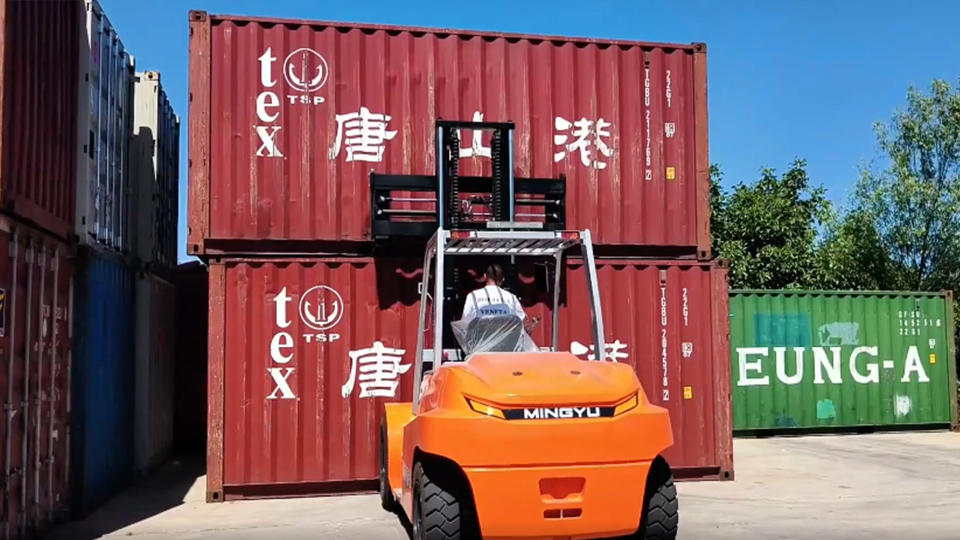
Rear-wheel steering dynamics
Counterbalance weight distribution
Visibility limitations and load obstruction
Maneuvering characteristics in confined spaces
Module 3: Vehicle Capabilities and Limitations
Rated load capacities at various load centers
Lift height restrictions and mast tilt functions
Grade and surface condition limitations
Attachment effects on stability and capacity
Module 4: Hazard Recognition and Mitigation
Pedestrian traffic management
Narrow aisle and overhead obstruction protocols
Ramp and incline operation procedures
Hazardous location classifications (explosive atmospheres, flammable materials)
Module 5: Refueling and Battery Charging
Propane cylinder exchange safety
Battery charging area ventilation and PPE
Diesel refueling fire prevention
Electric truck charging procedures
Written Assessment: Standard examinations require 70–80% passing scores covering all curriculum modules . Reputable providers offer unlimited retakes without additional fees.
Phase 3: Practical Training (Hands-On Demonstration)
Supervised Operation Components:
Pre-Operational Inspection:
Daily equipment check procedures
Hydraulic system leak detection
Tire condition and damage assessment
Operational control functionality verification
Safety device (lights, alarms, seatbelts) confirmation
Basic Maneuvering Skills:
Starting, stopping, and smooth acceleration
Forward and reverse operation
Turning radius management (rear-steer dynamics)
Parking on level surfaces and grades
Load Handling Operations:
Approaching, engaging, and lifting loads
Load stability assessment and centering
Travel with elevated loads (prohibited except at heights necessary for clearance)
Stacking and unstacking at various heights
Unattended parking protocols (forks lowered, brakes set, power off)
Workplace-Specific Conditions:
Operating on ramps and inclines
Navigating narrow aisles and doorways
Pedestrian interaction protocols
Hazardous surface conditions (wet, oily, uneven floors)
Duration: Practical training typically requires 8–24 hours of supervised operation, varying by operator aptitude and equipment complexity.
Phase 4: Performance Evaluation
OSHA-Mandated Employer Evaluation:
The final certification step requires employer-conducted assessment of:
Safe operation in the actual workplace environment
Competency on the specific equipment the operator will use
Adherence to workplace safety rules and operational procedures
Ability to recognize and avoid hazards specific to the work environment
Evaluation Documentation: Employers must maintain written certification records including:
Operator name and certification date
Training completion date and content summary
Evaluation date and evaluator identity
Equipment type(s) the operator is authorized to operate
Certification Issuance: Upon successful evaluation, the employer issues the official certificate—typically a wallet card and/or written documentation—authorizing the individual to operate specified equipment classes.
Equipment Classification and Specialized Certification
OSHA recognizes seven distinct classes of powered industrial trucks, with certification typically specific to the equipment class operated :
|
Class |
Equipment Type |
Power Source |
Typical Applications |
|
I |
Electric Motor Rider Trucks |
Battery |
Indoor warehousing, food handling |
|
II |
Electric Motor Narrow Aisle |
Battery |
High-density storage, reach trucks, order pickers |
|
III |
Electric Motor Hand Trucks |
Battery |
Pallet jacks, walkie stackers, low-lift platforms |
|
IV |
Internal Combustion Cushion Tire |
Gas/LPG/Diesel |
Smooth hard surfaces, indoor/outdoor |
|
V |
Internal Combustion Pneumatic Tire |
Gas/LPG/Diesel |
Rough terrain, outdoor yards, lumber yards |
|
VI |
Electric/IC Tractors |
Battery/Combustion |
Towing, aircraft tugs, specialized hauling |
|
VII |
Rough Terrain Forklift Trucks |
Diesel/Gas |
Construction, agriculture, unimproved surfaces |
Cross-Training Requirements: Certification in one class does not automatically authorize operation of other classes. Employers must provide equipment-specific training and evaluation for each truck type .
Recertification and Continuing Competency
Three-Year Renewal Cycle
Forklift certification expires every three years from the date of initial certification or last evaluation . Renewal requires:
Refresher training on operational principles and safety updates
Performance evaluation demonstrating continued competency
Updated certification documentation
Mandatory Retraining Triggers
Immediate recertification is required when:
Accidents or Near-Misses: Operator involvement in incidents suggests unsafe operation
Unsafe Operation Observation: Supervisors identify dangerous practices requiring correction
Equipment Class Changes: Assignment to different truck types requiring new skills
Workplace Condition Changes: New hazards, facility modifications, or operational process alterations
Evaluation Deficiencies: Three-year evaluation reveals competency gaps
Professional Development Pathways
Certified operators may pursue advanced credentials:
Train-the-Trainer Certification: Qualifying to instruct and certify other operators
Specialized Equipment: Crane operation, aerial lift certification, heavy machinery licensure
Safety Leadership: OSHA 30-hour certification, safety committee participation
Technical Tracks: Fleet maintenance, logistics engineering, warehouse management
Cost Analysis and Financial Considerations
Individual Investment Ranges
|
Training Type |
Cost Range |
Duration |
Practical Component |
|
Employer-Sponsored |
$0 |
1–3 days |
Included |
|
Online Only |
$50–$100 |
1–2 hours |
Requires employer follow-up |
|
Community College |
$100–$300 |
2–3 days |
Included |
|
Private Training Facility |
$200–$500 |
1–3 days |
Included |
|
Specialized/Rough Terrain |
$300–$800 |
2–5 days |
Included |
Cost-Reduction Strategies
Employer Sponsorship: Most logistics employers provide free certification as a hiring incentive or employee benefit
Workforce Development Grants: WIOA (Workforce Innovation and Opportunity Act), TAA (Trade Adjustment Assistance), and state vocational rehabilitation programs often cover training costs
Staffing Agency Partnerships: Many industrial staffing firms offer subsidized or free certification for registered workers
Group Training Discounts: Employers certifying multiple operators receive volume pricing from providers
Career Implications and Market Value
Employment Advantages
Certified forklift operators command wage premiums of 15–25% compared to uncertified warehouse workers . Certification demonstrates:
Safety consciousness and risk awareness
Technical competency and professional commitment
Regulatory compliance understanding
Reduced employer training investment
Industry Mobility
Forklift certification creates pathways across diverse sectors:
Warehousing and Distribution: Amazon, FedEx, UPS, regional logistics centers
Manufacturing: Production support, raw materials handling, finished goods distribution
Construction: Material delivery, rough terrain operation, site logistics
Retail and Wholesale: Big-box distribution centers, inventory management
Food and Beverage: Cold storage, processing facilities, distribution networks
Ports and Intermodal: Container handling, yard operations, vessel loading
Advancement Trajectories
Certification serves as foundation for career progression:
Lead Operator/Trainer: Mentoring new operators, conducting refresher training
Warehouse Supervisor: Team leadership, safety coordination, operational oversight
Fleet Manager: Equipment procurement, maintenance scheduling, operator scheduling
Safety Specialist: OSHA compliance, incident investigation, safety program development
Common Pitfalls and Compliance Failures
Pitfall 1: "Instant Certification" Scams
Beware of providers offering complete certification without practical evaluation. These violate OSHA standards and provide worthless credentials. Legitimate certification always requires hands-on assessment .
Pitfall 2: Generic "Universal" Certificates
Valid certification must specify the exact equipment class and workplace conditions. Generic certificates lacking equipment classification details are non-compliant and may not satisfy employer requirements .
Pitfall 3: Failure to Verify Provider Authorization
Ensure training providers are OSHA-authorized and curriculum aligns with 29 CFR 1910.178. Unauthorized providers may deliver inadequate training that fails to meet regulatory standards.
Pitfall 4: Ignoring Recertification Requirements
Allowing certification to lapse or failing to complete mandatory retraining following incidents creates liability exposure and potential employment termination.
Conclusion
Becoming a certified forklift operator requires navigating a structured pathway of theoretical instruction, hands-on training, and employer-conducted evaluation. The process, governed by OSHA's 29 CFR 1910.178 standard, ensures operators possess the knowledge and skills necessary for safe equipment operation in demanding industrial environments.
For aspiring operators, the certification journey offers multiple entry points—employer-sponsored programs for current workers, community college courses for career changers, and online theoretical training for flexible learning. Regardless of pathway, successful certification demands commitment to safety principles, practical skill development, and ongoing competency maintenance.
In an industry where operational errors can result in fatalities, crushing injuries, and substantial property damage, forklift certification represents far more than regulatory compliance—it embodies the professional responsibility to protect oneself, colleagues, and the workplace. The investment in legitimate certification pays dividends through enhanced employability, wage premiums, and the foundational competency for a rewarding career in material handling and logistics.
Name: selena
Mobile:+86-13176910558
Tel:+86-0535-2090977
Whatsapp:8613181602336
Email:vip@mingyuforklift.com
Add:Xiaqiu Town, Laizhou, Yantai City, Shandong Province, China
