
vip@mingyuforklift.com
+86-0535-2090977

The Non-Negotiable Daily Ritual: Comprehensive Pre-Operation Inspection and Procedures for Forklifts
The forklift, or powered industrial truck, is an indispensable tool in logistics, warehousing, and manufacturing.1 However, its immense utility is shadowed by significant hazards. According to the Occupational Safety and Health Administration (OSHA), proper maintenance and daily inspection are critical in preventing the approximately 85 fatal accidents and 34,900 serious injuries involving forklifts annually in the United States alone.2
A diligent, systematic pre-operation inspection—often referred to as the daily check or shift check—is not merely a suggestion; it is a regulatory requirement (e.g., OSHA 29 CFR 1910.178(q)(7) mandates that industrial trucks be examined before being placed in service) and the cornerstone of any effective industrial safety program.3 This article outlines the essential, non-negotiable procedures that must be executed daily, or before the start of every shift, before a forklift is put into service.
Phase I: The Operator's Walk-Around (Key-Off Inspection) ��️
The first phase is a comprehensive visual and tactile inspection performed with the forklift turned off and on level ground. This ensures the safety of the operator during the check and prevents accidental movement.
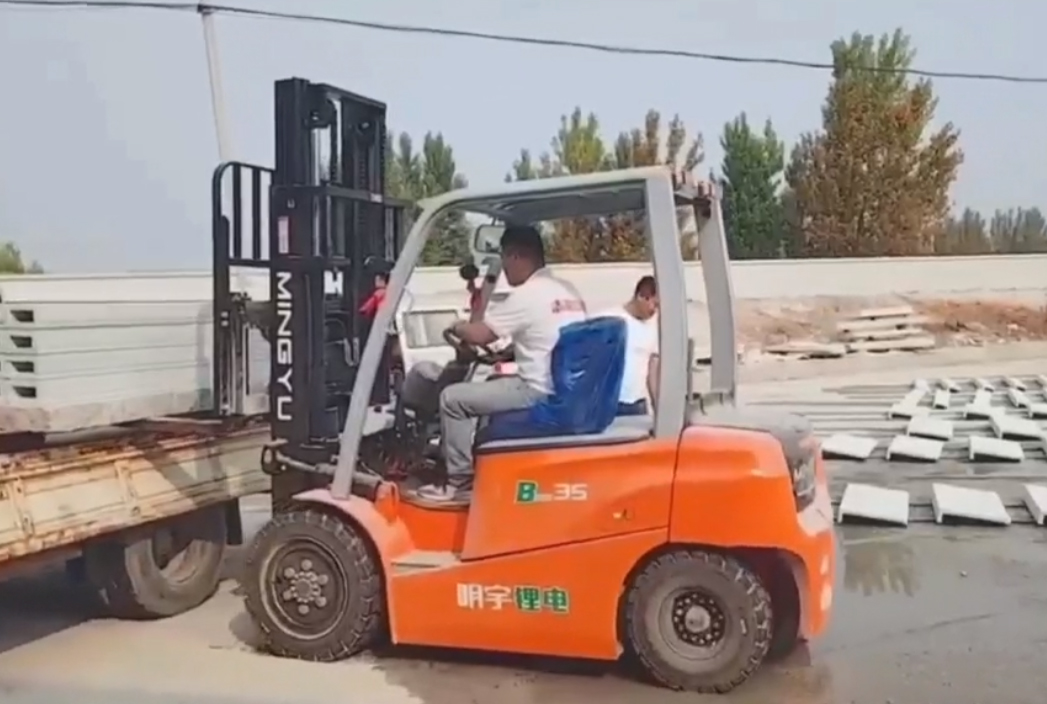
1. Mast and Fork Assembly Inspection
The lifting mechanism is arguably the most critical component for load handling. Any failure here can lead to catastrophic accidents.
Forks and Heel:
Check for Cracks/Bends: Inspect the shank and blade, paying special attention to the heel (the bend where the blade meets the shank) and the top mounting area.4 A crack indicates structural compromise and requires immediate removal from service.
Check for Wear: The thickness of the blade near the heel should not be worn down by more than 10% of its original thickness. $10\%$ wear reduces the carrying capacity by approximately 5$20\%$—a dangerous and non-compliant condition.6 Use a caliper or a designated fork wear gauge.
Locking Pins/Shafts: Ensure the fork retaining pins or mechanisms are present, secure, and functioning correctly to prevent accidental disengagement.
Mast Chains:
Tension and Lubrication: Check for proper and equal tension between chains. Chains should be free of rust, kinks, or stretching. Apply lubricant if necessary.
Broken or Distorted Links: Look closely for bent, broken, or stretched links, particularly on the inner and outer faces.
Sheaves and Rollers: Ensure the mast sheaves (pulleys) and carriage rollers rotate freely and are securely mounted without excessive wear or wobble.
Backrest Extension (Load Backrest): Verify the load backrest is securely attached and free of damage, ensuring it can prevent the load from shifting backward toward the operator.
2. General Frame and Overhead Guard Condition
The structural integrity of the truck protects the operator.
Overhead Guard (OHG)
Integrity: Inspect for broken welds, deformation, or structural damage. The OHG is designed to protect the operator from falling objects; any compromise renders it ineffective.
Mounting: Ensure all mounting bolts are present and tight.
Tires and Wheels:
Pneumatic Tires: Check the inflation pressure against the manufacturer's specification. Look for cuts, deep gouges, or exposed cords.
Solid/Cushion Tires: Inspect for chunks missing, excessive wear, or separation from the rim.7 The tire should not have flat spots that exceed a designated wear mark (often stamped on the tire).
Fluid Leaks: Inspect the floor beneath the truck for any evidence of hydraulic fluid, engine oil, coolant, or transmission fluid leaks. Even minor leaks can indicate a severe pending hydraulic or engine failure.8
3. Safety and Control Devices
These components ensure safe operation and communication.
Lights: Verify the functionality of all operational lights, including headlights, tail lights, and brake lights.9
Safety Devices: Test the horn and the warning beacon/strobe light (if equipped).10
Data Plates (Capacity Plates): The rated capacity plate must be present, legible, and match the current truck configuration and attachments.11 This plate is the single most important document for determining safe load limits.
Phase II: The Functional Check (Key-On Inspection) ��
The second phase involves turning on the forklift to test all dynamic systems and operator controls under no-load conditions.
1. Operator Compartment and Controls
The operator must ensure all controls are responsive and functional before moving the truck.
Seatbelt/Restraint: Check the seatbelt and/or operator restraint system for damage and ensure the buckle latches securely.12 This is a primary safety device.
Brakes:
Parking Brake: Engage the parking brake and attempt to move the truck slightly forward (using inching or minimal throttle).13 The brake must hold the truck firmly.
Service Brakes (Foot Brake): Test the service brake action. The pedal should not feel spongy, and the truck must stop smoothly and evenly without excessive travel or pulling to one side.
Directional Controls: Test both forward and reverse gears for smooth engagement.
Steering: Check for excessive free play or looseness in the steering wheel. The steering should be responsive and not bind or chatter.
Gauges and Indicators: Verify that the battery discharge indicator (BDI) on electric trucks, the oil pressure gauge, the coolant temperature gauge, and the fuel level gauge (or hour meter) are all functioning and displaying normal readings.14
2. Hydraulic and Lift System Test
This is a dynamic check of the core lifting mechanism.
Lift and Lower Control: Fully raise and lower the forks. The action should be smooth, without shuddering, hesitation, or unexpected drops.
Tilt Control: Fully tilt the mast forward and backward. The movement should be smooth and the mast should hold its position without "drift" (unintentional movement).
Attachment Controls (If applicable): If equipped with a side-shifter, rotator, or clamp, test all hydraulic functions to ensure they operate properly and without hydraulic leakage under pressure.
3. Engine and Power Systems (Internal Combustion Trucks)
For ICE trucks, the engine's health is crucial for reliable performance and safety.
Engine Noise: Listen for unusual noises, knocking, misfiring, or excessive exhaust smoke upon startup and during the hydraulic function tests.
Exhaust System: Check for exhaust leaks, which pose a severe carbon monoxide hazard, especially in enclosed spaces.
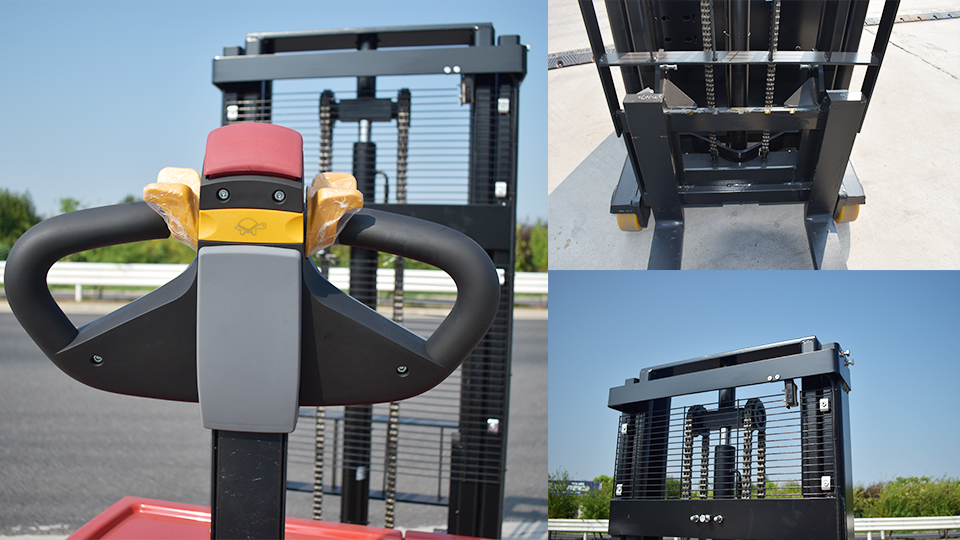
Propane Tank (LPG Trucks):
Mounting: Ensure the tank is secured tightly in its bracket with the retaining pin/strap.
Hoses and Fittings: Check for leaks around fittings (use a soapy water solution if odor is present), cuts, or deterioration on hoses.15 Ensure the pressure relief valve is pointed upward.
4. Battery and Electrical Systems (Electric Trucks)
The battery is the core of an electric truck.
Battery Condition: Check the charge level on the BDI. Low charge can lead to reduced hydraulic pressure and performance.
Connections: Ensure battery connectors and cables are secure and free of corrosion.16 Look for cracked or damaged insulation.
Water Level (Lead-Acid): If applicable, verify the electrolyte level is adequate, though this is often done less frequently than daily.
Phase III: Documentation and Reporting ��
The inspection is not complete until the results are formally documented. A check that is not documented is a check that was never performed, from a compliance standpoint.
1. Completion of the Daily Checklist
The operator must sign and date a formal Daily Pre-Operation Checklist upon completion of the inspection. This checklist is a legal document that confirms the truck was inspected and found to be in safe operating condition.
2. Reporting Defects
If Safe: If the inspection reveals a minor defect that does not immediately compromise safety (e.g., a non-critical light is out, a minor leak), the operator should report it immediately to the supervisor and/or maintenance department for scheduled repair.
If Unsafe (Red Tag/Out-of-Service): If any major defect is found—such as structural cracks, faulty brakes, significant fluid leaks, or an inoperative load capacity plate—the forklift MUST be immediately removed from service.
The operator must affix an "Out-of-Service" or "Do Not Operate" tag (often red-tagged) to the steering wheel or control panel.17
The operator must immediately notify a supervisor and the maintenance team. No one should attempt to operate the truck until the deficiency has been corrected and the truck has been certified safe by qualified maintenance personnel.
Regulatory Mandate and Technical Rationale
The rigorous adherence to this daily ritual is mandated by regulations worldwide (e.g., OSHA in the U.S., HSE in the U.K., and similar bodies globally) and is rooted in fundamental engineering and safety principles.18
Fatigue and Wear: Components like forks, mast chains, and tires are subject to immense stress, cyclical loading, and metal fatigue.19 A daily check is the primary defense against catastrophic structural failure resulting from cumulative stress.
Hydraulic System Integrity: Hydraulic systems operate at extremely high pressures (often $2000$ to $3000$ PSI). A small leak or damaged hose can lead to a sudden, complete loss of lifting or braking function.20
Operator Protection: Components like the overhead guard and seatbelt are passive safety systems. Their integrity must be ensured daily, as they are the last line of defense in a tip-over or falling-object scenario.
In summary, the daily pre-operation inspection is the most crucial $10-15$ minutes of a forklift operator's shift. It is a disciplined, systematic procedure that shifts the burden of safety from chance to certainty, ensuring compliance, prolonging the equipment's lifespan, and, most importantly, protecting the life and limb of the operator and surrounding personnel. The commitment to this routine is the hallmark of a world-class safety culture.
Name: selena
Mobile:+86-13176910558
Tel:+86-0535-2090977
Whatsapp:8613181602336
Email:vip@mingyuforklift.com
Add:Xiaqiu Town, Laizhou, Yantai City, Shandong Province, China