
vip@mingyuforklift.com
+86-0535-2090977

The Path to Proficiency: A Technical Guide to Forklift Operator Certification and Licensing
The forklift, or Powered Industrial Truck (PIT), is the backbone of modern logistics, warehousing, and material handling. Operating this heavy machinery requires a high degree of technical skill, attention to detail, and, most importantly, compliance with stringent safety regulations. Unlike a conventional motor vehicle license issued by a government agency, a "forklift license" (the common terminology for the required credential) is actually an Employer Certification based on a comprehensive training and evaluation process mandated by regulatory bodies like the Occupational Safety and Health Administration (OSHA) in the United States (under standard 29 CFR 1910.178 for General Industry).1
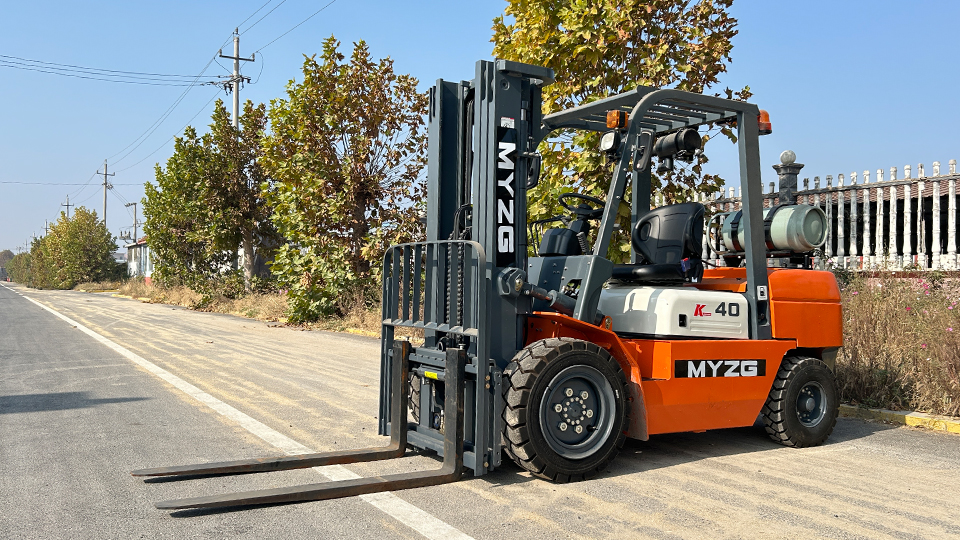
The question "Where can I go to get a forklift license?" requires a detailed, technical answer that outlines the required multi-phase process and identifies the legitimate training avenues for each phase. The process is a combination of theoretical knowledge acquisition, practical skills development, and on-the-job evaluation.2
I. Understanding the Regulatory Mandate: Certification vs. License
Before seeking training, it is crucial to understand what the law requires.
A. The Three-Part Training Requirement (OSHA)
OSHA requires that all PIT operators complete a training program that consists of three distinct components:3
|
Phase |
Description |
Location/Provider |
Responsibility |
|
1. Formal Instruction (The 'Classroom' Portion) |
Theoretical instruction covering safety principles, operating instructions, warnings, precautions, load capacity, vehicle stability, inspection, and maintenance. |
Online Course Providers, Technical Schools, In-House Trainers |
Trainee/Employer |
|
2. Practical Training (Hands-On Demonstration) |
Demonstrations by the trainer and practical exercises performed by the trainee, focusing on the specific type of truck and workplace environment. |
Workplace, Dedicated Training Center |
Employer |
|
3. Performance Evaluation (The 'Certification') |
The final assessment of the operator's ability to safely operate the forklift in the actual working environment. This evaluation must be conducted by the employer or a qualified person hired by the employer. |
Actual Workplace |
Employer |
The "forklift license" is the final record kept by the employer, certifying that the operator successfully completed all three parts of this training and evaluation.4 No online course alone can fully certify an operator.
B. Key Regulatory Facts
Age Requirement: Operators must be at least 18 years old.5
Driver's License: A standard state-issued motor vehicle driver's license is not required by Federal OSHA, though some companies may require one for insurance or internal policy reasons.6
Validity and Recertification: The operator's performance must be evaluated at least once every three years.7 Refresher training is required if the operator is involved in an accident, is observed operating unsafely, or is assigned to a different type of truck or work environment.8
II. Where to Obtain Formal Instruction (Phase 1)
The theoretical or "classroom" portion is the most flexible part of the training and can be completed through several distinct channels.9
A. Dedicated Online Certification Providers
This is the most common and often most affordable route for individuals seeking their first step in certification or for employers managing the theoretical training of many workers.
|
Provider Type |
Pros |
Cons |
Target Audience |
|
Direct Online Courses (e.g., OSHA training centers, specialized certification sites) |
Affordable, Self-Paced, Convenient. Offers instant printable certificate for the formal instruction portion. |
Only satisfies the theoretical requirement; does not include hands-on evaluation. Requires separate employer performance test. |
Individuals seeking pre-employment training; Employers using a blended learning approach. |
|
Specialized Forklift Training Schools (Blended Model) |
Often includes high-quality video instruction, interactive elements, and robust curriculum covering all PIT classes (I-VII). |
May require trainees to secure their own practical evaluation afterward. |
New operators who want a thorough theoretical foundation. |
Technical Note: When selecting an online provider, verify that the course explicitly covers the topics outlined in OSHA 29 CFR 1910.178(l)(3) and provides a clear certificate of completion for the formal instruction component only.
B. Technical and Community Colleges
Many vocational or community colleges offer continuing education or workforce development courses specifically for forklift operation.10
Format: Typically a one- or two-day course combining classroom lecture with a hands-on session using the college's training equipment.
Advantages: Provides an introduction to hands-on practice, often leading to a higher quality learning experience than purely online.11 The instructors are generally certified "Train-the-Trainer" professionals.12
Disadvantages: Less flexible scheduling; higher upfront cost (typically $100 - $300); the certification is still subject to the final, specific workplace evaluation by the operator's actual employer.
C. Manufacturer or Dealership Training Programs
Major forklift manufacturers (e.g., Toyota, Crown, Hyster) and their authorized dealers often operate dedicated training centers.
Advantages: Training is highly specialized to the manufacturer's equipment, ensuring the operator understands the specific features, controls, and maintenance requirements of those particular trucks.13 Often uses state-of-the-art equipment.
Disadvantages: More expensive; usually geared toward corporate clients/employers rather than individual walk-ins.14
III. The Crucial Role of the Employer (Phases 2 & 3)
The most critical and non-transferable steps—the hands-on training and the final performance evaluation—must be conducted by the employer or their designated qualified representative.15 This is where the license (certification) is actually granted.
A. Employer-Provided In-House Training
In the majority of industrial settings, the employer manages the entire training and certification process internally.16
The Qualified Trainer: OSHA mandates that training and evaluation be conducted by a person with the "knowledge, training, and experience to train powered industrial truck operators and evaluate their competence."17 This is often a supervisor, a safety manager, or a dedicated operator who has completed a "Train-the-Trainer" course.
Practical Training (Phase 2): This phase is essential because it introduces the operator to the specific hazards and conditions of their workplace:18
Specific truck types (e.g., sit-down counterbalanced, reach trucks, order pickers).19
Workplace hazards (e.g., floor surface conditions, narrow aisles, pedestrian traffic, ramps, and grades).20
Load composition and stability unique to that facility.
Performance Evaluation (Phase 3): The final step where the operator is observed performing tasks under actual working conditions.21 The trainer must verify the operator can:
Perform a pre-shift safety inspection.22
Maneuver the truck safely around obstacles and pedestrians.
Load, transport, and stack materials correctly within the truck's capacity limits.23
B. Third-Party On-Site Certification Services
If an employer does not have a qualified in-house trainer, they can hire an external consulting company or safety service provider.

Service Model: These consultants come to the employer's facility, provide the formal instruction on-site, and then conduct the practical training and evaluation using the company’s actual forklifts in their specific working environment.
Benefit to Employer: Ensures 100% compliance by having an external expert conduct the final mandatory hands-on evaluation and maintain the certification records.
C. The "Job Seeker" Dilemma: Getting Certified Before Employment
A common challenge for new operators is obtaining the full certification before securing a job, as the final evaluation requires a workplace.24
Strategy 1: Complete Formal Instruction: Individuals should complete the theoretical online course. This provides the necessary documentation to show prospective employers that they have satisfied Phase 1 of the requirement.
Strategy 2: Seek Employers with Internal Programs: Job seekers should target warehouses, distribution centers, and manufacturing plants that explicitly mention in their job postings that they provide on-site training and final certification. These employers prefer to train new hires on their specific equipment and policies.
Strategy 3: Full Certification Training Centers: In some metropolitan areas, there are large, independent training centers that offer comprehensive multi-day courses, including the use of their own equipment for practical evaluation. While valuable, candidates must still be aware that their employer reserves the right to re-evaluate and re-certify them on the equipment and conditions specific to the job site.
IV. The Documentation: The "Forklift License"
The resulting document from this entire process is not a "license" from a government body, but a Certification Record held by the employer.25
A. Certification Record Requirements
OSHA requires the employer's certification document to include:
The Name of the Operator.
The Date of the Training (Formal and Practical).
The Date of the Evaluation (Performance Test).
The Name of the Person(s) performing the training and evaluation.
The physical proof carried by the operator is often a wallet-sized card issued by the employer or the training provider, referencing the completion of the certification process.26
B. Reciprocity and Transferability
Transfer of Training: The theoretical knowledge gained from an online course or technical school (Phase 1) is generally transferrable between employers and valid nationwide.
Non-Transfer of Certification: The final, signed certification (Phases 2 and 3) is not universally transferrable. Because the certification is tied to the specific type of truck and the specific working conditions of the employer, a new employer must conduct a new performance evaluation and issue their own certification record before the operator can begin work at the new site.27 The previous training simply makes the new certification process faster.
Conclusion: The Responsibility of Certification
The technical process of obtaining a "forklift license" is a clear example of industry self-regulation under a governmental safety mandate. It is a shared responsibility:
The Individual's Responsibility is to seek and complete high-quality formal instruction (Phase 1).
The Employer's Responsibility is to ensure that every operator is thoroughly trained on the specific equipment and workplace hazards, and to formally certify their competence through a final hands-on evaluation (Phases 2 and 3).28
Therefore, to answer the question, an individual can begin their journey at an Online Certification Provider or a Community College, but the final, legally required forklift license (certification) is ultimately granted at the workplace by the employer or an authorized third-party trainer.29 Safety and compliance hinge on the successful integration of all three phases of this mandatory training process.
Name: selena
Mobile:+86-13176910558
Tel:+86-0535-2090977
Whatsapp:8613181602336
Email:vip@mingyuforklift.com
Add:Xiaqiu Town, Laizhou, Yantai City, Shandong Province, China
