
vip@mingyuforklift.com
+86-0535-2090977

Abstract
The aerial work platform (AWP) industry is undergoing a material revolution driven by electrification mandates, urbanization constraints, and sustainability imperatives. This article examines the technical progress of lightweight materials—including advanced high-strength steels, aluminum alloys, and composite materials—in modern AWP design. Through analysis of recent industry developments, performance metrics, and manufacturing innovations, we demonstrate how strategic material selection enables the industry to achieve conflicting objectives: extending working heights while reducing machine weight, enhancing payload capacity while minimizing ground pressure, and improving energy efficiency while maintaining structural integrity. The convergence of material science with electrification and smart manufacturing technologies is fundamentally reshaping the capabilities and economics of elevated access equipment.
1. Introduction
Aerial work platforms have evolved from simple scaffolding structures to sophisticated machinery capable of accessing heights exceeding 50 meters while maneuvering through standard doorways . This evolution has been enabled by continuous advancement in hydraulic systems, automation technologies, and critically, structural materials. The contemporary AWP industry faces unprecedented pressures: stringent emissions regulations favoring electric propulsion, urban construction projects requiring equipment compatible with sensitive flooring systems, and transportation efficiency demands that penalize excessive weight .
Traditional AWP construction relied predominantly on conventional structural steels such as Q345, a low-alloy steel with 345 MPa yield strength commonly used in bridges and pressure vessels . While this material offers excellent durability and cost-effectiveness, its density of 7.86 g/cm³ imposes significant penalties on machine mobility, energy consumption, and operational flexibility. The industry has responded through systematic adoption of lightweight materials, creating a hierarchical approach where high-strength steels address load-critical components, aluminum alloys enable specialized applications, and composite materials offer transformative potential for next-generation platforms .
2. High-Strength Steel: Optimizing the Foundation
2.1 Advanced High-Strength Structural Steels
High-strength structural steels represent the most mature and widely implemented lightweight material solution in contemporary AWP manufacturing. These materials, including grades with yield strengths ranging from 700 to 1300 MPa, enable engineers to reduce material thickness by 30-50% while maintaining or exceeding structural performance parameters . The technical principle is straightforward: higher strength allows reduced cross-sectional areas, directly translating to weight reduction without compromising load-bearing capacity.
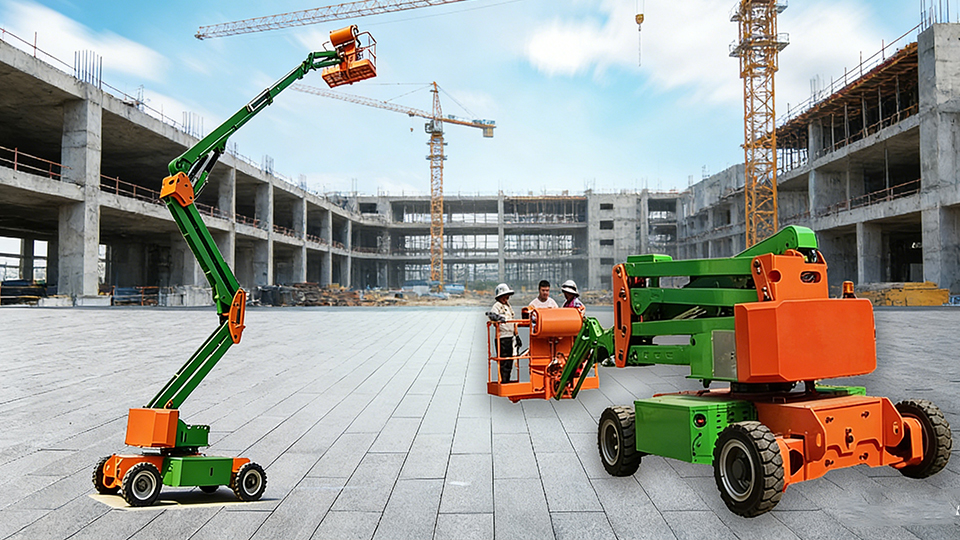
Industry leader Zhejiang Dingli Machinery has demonstrated the practical impact of these materials, reporting 6-9% improvement in lift-to-weight ratios across their product lines in 2024 through adoption of high-strength, lightweight alloys . This improvement cascades through the entire machine design: reduced dead weight enables smaller hydraulic systems, lighter chassis structures, and decreased power requirements. Dingli's implementation has contributed to a 4% year-over-year decline in field failures through 2024, demonstrating that lightweighting, when properly engineered, enhances rather than compromises reliability .
2.2 Manufacturing and Economic Considerations
The transition to high-strength steels requires adaptation of manufacturing processes. These materials exhibit different forming characteristics, welding requirements, and fatigue behaviors compared to conventional steels. However, modern high-strength grades offer improved workshop properties including tight thickness tolerances and predictable bending characteristics—attributes critical for AWP fabrication where complex tubular sections and multi-bend components dominate structural assemblies .
Economic analysis reveals that high-strength steels often reduce total production costs despite higher material prices per kilogram. Weight reduction decreases transportation costs, simplifies assembly procedures, and enables downsizing of complementary systems. For rental fleet operators—the dominant business model in the AWP industry—reduced weight translates to improved fuel efficiency, broader application range, and decreased maintenance frequency, enhancing asset utilization and return on investment .
3. Aluminum Alloys: Enabling Indoor and Urban Operations
3.1 Material Properties and Applications
Aluminum alloys, particularly the 6000 series (EN AW 6061-T6) and 7000 series (7075-T6), have transitioned from niche applications to primary structural materials in specific AWP categories . With a density of approximately 2.7 g/cm³—roughly one-third that of steel—these alloys offer theoretical weight reductions of 65%, though practical implementations typically achieve 40-50% after accounting for stiffness compensation requirements .
Mast lifts and vertical personnel lifts have emerged as primary beneficiaries of aluminum construction. These platforms utilize telescopic column structures fabricated from high-strength aluminum profiles, achieving "beautiful shape, small volume, light weight, stable rising, and safe operation" characteristics essential for indoor applications . The reduced weight enables operation on sensitive flooring systems—including data centers, cold storage facilities, and retail environments—where traditional steel platforms would exceed load limits.
3.2 Hybrid Construction Strategies
Pure aluminum construction faces limitations including lower fatigue resistance, reduced hardness, and higher material costs compared to steel . Consequently, hybrid approaches have gained traction, combining aluminum for weight-critical elevated components with steel bases for stability. This strategy optimizes the strength-to-weight ratio while managing material compatibility through careful isolation and protective treatments.
The boom structures of modern aerial platforms illustrate this hybrid philosophy. While the base chassis and primary load-bearing structures may utilize high-strength steel, telescopic boom sections increasingly incorporate aluminum to reduce cantilevered weight and improve reach capabilities . This approach requires sophisticated engineering to address galvanic corrosion potential and differential thermal expansion, typically resolved through polymer interfaces and careful joint design.
4. Composite Materials: The Next Technological Frontier
4.1 Carbon Fiber and Glass Fiber Reinforced Polymers
Composite materials, specifically carbon fiber-reinforced polymers (CFRP) and glass fiber-reinforced polymers (GFRP), represent the most aggressive approach to weight reduction in AWP design. These materials offer specific strength and specific stiffness ratios superior to any metallic alternative, enabling radical weight reduction in applications where cost constraints permit .
Carbon fiber composites provide exceptional stiffness, low density, and dimensional stability—properties directly applicable to AWP boom structures and platform baskets. The material's anisotropic nature allows engineers to tailor fiber orientation to specific load paths, optimizing material distribution for complex stress states encountered in articulating boom systems . Glass fiber composites offer a cost-effective alternative for secondary structures, providing good tensile strength and impact tolerance at significantly lower cost than carbon fiber .
4.2 Implementation Challenges and Solutions
Despite compelling weight advantages, composite materials face significant barriers to widespread AWP adoption. Environmental durability concerns—particularly UV degradation, moisture absorption, and impact damage—require protective measures and ongoing research. Manufacturing complexity, quality control requirements, and material costs currently limit composite applications to specialized high-value platforms .
The joining of composite components to metallic structures presents particular challenges. Electrical discontinuities between carbon fiber and aluminum or steel can create galvanic corrosion cells, while thermal expansion mismatches induce stress concentrations at joints . Solutions include the use of glass fiber isolation layers, adhesive bonding techniques, and mechanical fasteners with careful galvanic isolation. These complexities add manufacturing cost and require specialized expertise, currently restricting composite applications to premium equipment segments.
5. Electrification Synergy and Material Selection
The industry-wide transition toward electric and hybrid aerial platforms creates powerful synergies with lightweight material strategies. Electrification imposes additional weight penalties through battery systems, yet simultaneously amplifies the benefits of weight reduction through extended range and operational duration .
Market analysis indicates that electric and hybrid platforms will expand rapidly as industries seek low-emission AWPs to comply with environmental regulations and reduce operating costs . Lightweight materials directly address the primary limitation of electric AWPs: energy storage density. By reducing the power required for lifting operations, manufacturers can utilize smaller battery packs or extend operational time between charges. This relationship between structural weight and energy system sizing creates a virtuous cycle where material innovation enables practical electrification.
Williams Advanced Engineering's collaboration with Airbus on the Zephyr High Altitude Pseudo-Satellite program exemplifies this convergence, combining "ultra-lightweight materials, battery technologies and electrical cell chemistries" to achieve months-long endurance at stratospheric altitudes . While this represents an extreme application, the underlying principles translate directly to terrestrial AWPs: every kilogram of structural weight reduction enables additional payload capacity, extended operation, or reduced energy consumption.
6. Design Optimization and Advanced Manufacturing
6.1 Topology Optimization and Generative Design
The application of lightweight materials must be coupled with advanced design methodologies to realize full potential. Topology optimization algorithms enable engineers to distribute material only where structurally necessary, creating organic structures that minimize weight while maintaining safety factors. When combined with high-strength materials and additive manufacturing capabilities, these techniques achieve radical weight reduction impossible with traditional design approaches.
6.2 Manufacturing Technology Integration
Advanced manufacturing processes are essential for realizing the potential of lightweight materials. Automated fiber placement for composites, precision extrusion for aluminum profiles, and laser cutting/welding for high-strength steels enable consistent quality and cost-effective production. The integration of these technologies with traditional AWP manufacturing represents a significant capital investment but yields competitive advantages in product performance and operational efficiency.
7. Market Trends and Future Outlook
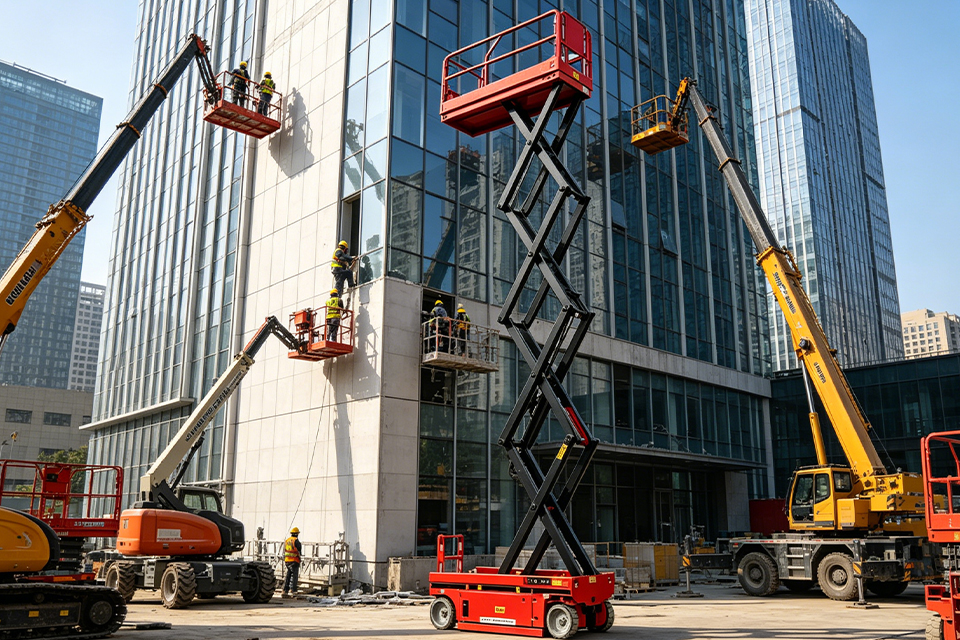
The AWP market is projected to grow substantially, driven by urbanization, infrastructure investment, and safety regulation enforcement . Within this growth, lightweight materials are identified as a key technological trend, with manufacturers investing to improve efficiency and reduce maintenance needs . The rental market dominance in the industry—where equipment utilization rates and transportation costs critically impact profitability—accelerates adoption of lightweight solutions.
Emerging trends include the integration of telematics and IoT systems with lightweight structures, enabling real-time monitoring of structural health and usage patterns . This data-driven approach supports predictive maintenance, optimized fleet deployment, and potentially, usage-based design optimization for future material applications.
The development of organosheets—thermoplastic composite sheets reinforced with continuous fibers—offers particular promise for AWP applications . These materials combine the formability of thermoplastics with the strength of continuous fiber reinforcement, potentially enabling cost-effective production of complex composite components for aerial platforms.
8. Conclusion
The application of lightweight materials in aerial work platform design has progressed from experimental applications to mainstream engineering practice, driven by electrification imperatives, urban operational requirements, and economic optimization. High-strength steels provide immediate, cost-effective weight reduction with minimal manufacturing disruption. Aluminum alloys enable specialized applications requiring minimal ground pressure and extended indoor operation. Composite materials, while currently limited by cost and manufacturing complexity, offer transformative weight savings for premium applications.
The convergence of material science, electrification, and smart manufacturing technologies is fundamentally reshaping AWP capabilities. As research continues to address implementation challenges—particularly in composite durability, multi-material joining, and cost reduction—lightweight materials will become increasingly central to AWP design strategy. The technical progress documented in recent industry implementations demonstrates that the sector has moved beyond simple material substitution toward holistic lightweight system design, promising continued innovation in elevated access equipment capabilities and economics.
The future trajectory points toward increasingly integrated multi-material systems, where advanced simulation tools optimize material selection at the component level, and manufacturing automation enables cost-effective production of complex lightweight structures. This evolution will support the industry's dual objectives of extending operational capabilities while minimizing environmental impact, ensuring that aerial work platforms continue to enable safe, efficient access to elevated work environments across diverse applications.
References
[1] HYNEE. "Reaching New Heights: The Evolution of Aerial Work Platform Equipment." 2025.
[12] MORN Lift. "What Is The Feature Of Aluminum Aerial Work Platforms." August 13, 2020.
[15] Credence Research. "Aerial Work Platforms (AWPs) Market Size, Growth and Forecast." December 3, 2025.
[16] Unmanned Systems Technology. "Bespoke Composite Manufacturing for UAV."
[19] PAS-GON. "Carbon Fiber-Reinforced Plastic for Aerospace & Defense." November 27, 2023.
[22] Matrix BCG. "PESTLE Analysis of Zhejiang Dingli Machinery." March 26, 2026.
[24] The Engineer. "Williams and Airbus join forces on Zephyr drone project." April 19, 2022.
[25] DOZR. "Straight Boom Lifts: The Ultimate Guide." June 22, 2023.
[26] Man Lift. "The Future of Aerial Work Platforms: Emerging Trends in 2025 and Beyond." April 3, 2026.
[27] PMC. "Characterization of Joints between Carbon Fiber Composite Parts." 2017.
[30] Everstar Machinery. "Understanding Scissor Lift Weight: A Guide to Capacity and Dimensions." February 14, 2025.
[31] AeroMorning. "Airbus and Williams Advanced Engineering team to explore technology collaboration." December 18, 2017.
[33] OpenPR. "Truck-Mounted Aerial Work Platform (AWP) Market Size, Growth Analysis 2033." November 27, 2025.
[34] Straits Research. "Organosheet Market | Competitive Landscape 2033." April 8, 2024.
Name: selena
Mobile:+86-13176910558
Tel:+86-0535-2090977
Whatsapp:8613181602336
Email:vip@mingyuforklift.com
Add:Xiaqiu Town, Laizhou, Yantai City, Shandong Province, China
