
vip@mingyuforklift.com
+86-0535-2090977

Introduction
The modern warehouse operates as a complex ecosystem where material handling efficiency directly impacts bottom-line performance. At the heart of this operation lies the forklift—a critical piece of equipment whose power source selection can fundamentally alter operational dynamics. While electric forklifts have gained significant market share in recent years, propane-powered forklifts (also known as liquefied petroleum gas or LPG forklifts) continue to maintain distinct advantages in specific warehouse environments. This technical analysis examines the comparative benefits of propane forklifts over electric and diesel alternatives, with particular focus on operational flexibility, economic considerations, and performance characteristics that make them uniquely suited for certain material handling applications.
Operational Versatility: The Indoor-Outdoor Advantage
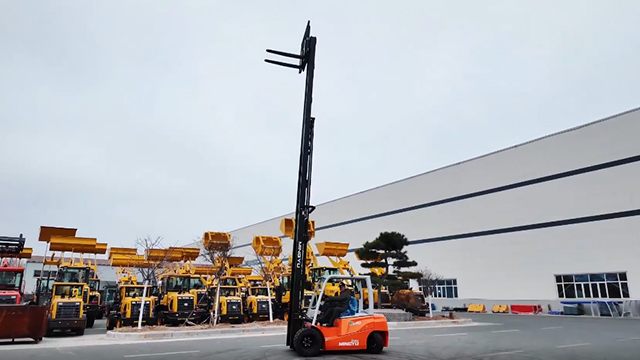
Perhaps the most significant advantage propane forklifts hold over their electric counterparts is operational versatility across indoor and outdoor environments. Unlike electric forklifts, which are generally restricted to indoor use due to moisture sensitivity and IP rating limitations, propane forklifts demonstrate robust performance characteristics in both settings . This dual-environment capability eliminates the need for fleet segregation, allowing warehouse operators to deploy single units across loading docks, outdoor storage yards, and interior racking systems without equipment switching delays.
The operational flexibility extends to weather resilience. While electric forklifts face performance degradation in wet conditions and require specific International Protection (IP) ratings to handle moisture exposure, propane forklifts maintain consistent functionality across weather variations . This characteristic proves particularly valuable in facilities with partially open loading bays or operations in climates with frequent precipitation, where electric units would require weather-protected pathways or alternative equipment.
However, this advantage comes with environmental considerations. Propane forklifts, while cleaner than diesel alternatives, still produce carbon monoxide emissions that require adequate ventilation in enclosed spaces . Modern warehouses utilizing propane fleets must implement appropriate air quality monitoring systems and maintain ventilation infrastructure to ensure OSHA compliance and worker safety.
Refueling Efficiency and Continuous Operation
From an operational continuity perspective, propane forklifts demonstrate superior refueling efficiency compared to electric alternatives. A typical propane tank exchange requires less than one minute, effectively eliminating downtime associated with energy replenishment . This contrasts sharply with electric forklift charging protocols, which require 6-8 hours for full battery recharge plus mandatory cool-down periods to prevent thermal damage .
For multi-shift warehouse operations, this refueling advantage translates to measurable productivity gains. Electric forklifts operating across multiple shifts require either battery swapping infrastructure—demanding significant capital investment in spare batteries and exchange equipment—or opportunity charging during breaks, which may not fully restore capacity . Propane forklifts circumvent these logistical complications through simple tank replacement, maintaining consistent power output throughout extended operational periods without the power degradation characteristic of discharging batteries .
The fuel efficiency of propane further enhances operational economics. Propane forklifts demonstrate approximately 90% combustion efficiency, ranking higher than natural gas (87%), diesel (85%), and gasoline (82%) alternatives . This efficiency translates to extended runtime per fuel unit, with typical propane tanks supporting 6-8 hours of continuous operation depending on load intensity, maintenance quality, and operator behavior .
Power Performance and Load Handling
Torque characteristics represent another domain where propane forklifts maintain technical advantages. Propane-powered internal combustion engines deliver superior torque compared to electric motors, enabling more effective handling of inclines, ramps, and heavy-load acceleration . This performance characteristic proves critical in warehouses with multi-level operations, sloped loading docks, or frequent ramp navigation where electric forklifts may experience power limitations.
The power delivery consistency of propane systems also merits consideration. Unlike electric forklifts, which experience progressive performance degradation as battery charge depletes, propane forklifts maintain uniform power output until fuel exhaustion . This characteristic ensures predictable handling and lifting performance throughout operational shifts, eliminating the variable productivity associated with battery state-of-charge fluctuations.
Load capacity versatility further distinguishes propane forklifts. While electric models typically range from 3,000 to limited higher capacities, propane forklifts scale effectively from 3,000 pounds to over 100,000 pounds for specialized heavy-duty applications . This capacity range enables warehouse operations to standardize on propane power across diverse material handling requirements, from standard pallet movement to heavy machinery repositioning, without maintaining disparate fleet technologies.
Economic Analysis: Total Cost of Ownership
Initial acquisition costs favor propane forklifts significantly. A standard 5,000-pound capacity propane forklift typically ranges from $24,000 to $30,000, while equivalent electric models cost between $35,000 and $40,500—reflecting the substantial battery and charging system investments required for electric units . This upfront cost differential can reach 30-40%, presenting compelling capital expenditure advantages for propane fleet adoption.
However, total cost of ownership calculations require nuanced analysis. Electric forklifts demonstrate lower operating costs—approximately 75% cheaper to operate than propane alternatives according to energy consumption analyses . Electricity costs for industrial consumers average 7.95 cents per kWh (as of May 2024), resulting in annual energy expenditures of approximately $1,192.50 for typical 15,000 kWh consumption patterns, compared to propane costs fluctuating around $2.00 per gallon with consumption rates of approximately 6 pounds per hour .
Maintenance economics present mixed comparative advantages. Propane forklifts require traditional internal combustion engine maintenance—including oil changes, tune-ups, cooling system maintenance, and filter replacements—costing approximately $2.00 per operating hour . Electric forklifts, with fewer moving parts and no engine oil requirements, reduce maintenance costs to roughly $1.25 per hour, representing nearly 40% maintenance cost reduction . Nevertheless, electric forklifts introduce battery replacement costs every 5 years or 1,500 cycles for lead-acid systems, though modern lithium-ion alternatives extend this lifespan significantly .
The economic breakeven point between propane and electric typically occurs around 1,500 annual operating hours, beyond which electric forklifts demonstrate superior total cost of ownership despite higher initial investment . For lower-utilization warehouse operations or seasonal demand patterns, propane forklifts may maintain economic advantages throughout their service life.
Infrastructure and Implementation Considerations
Warehouse infrastructure requirements substantially favor propane adoption in certain operational contexts. Electric forklift implementation demands significant facility modifications, including high-voltage electrical infrastructure for charging stations, dedicated battery rooms with ventilation systems, eyewash stations, and potential electrical system upgrades to accommodate charging loads . These infrastructure investments can reach $5,000-$10,000 per charging station, with additional costs for electrical contractor services and potential utility line upgrades .
Propane infrastructure, conversely, requires dedicated storage areas for cylinder inventory and potentially on-site dispensing equipment. While propane storage necessitates safety compliance and ventilation considerations, the capital requirements typically remain lower than comprehensive electric charging infrastructure, particularly for smaller warehouse operations or facilities with limited electrical capacity .
The spatial efficiency of propane refueling compared to battery charging also warrants consideration. Battery charging stations require dedicated floor space with appropriate clearances and ventilation, while propane tank storage can utilize vertical racking systems and external storage areas, preserving valuable warehouse floor space for operational activities .
Environmental and Regulatory Context
Environmental performance positioning has evolved significantly, affecting propane forklift comparative advantages. While propane burns cleaner than diesel or gasoline—producing fewer particulates, nitrogen oxides, and carbon deposits—it remains a fossil fuel with measurable carbon emissions . Modern warehouse operations face increasing regulatory pressure regarding indoor air quality, with agencies like California Air Resources Board (CARB) implementing phase-out mandates for large spark-ignition forklifts beginning in 2026 .
Propane forklifts produce carbon monoxide emissions requiring careful ventilation management, with poorly tuned engines potentially exceeding 50 ppm CO concentrations in enclosed spaces . This environmental characteristic necessitates ongoing emissions testing, preventive maintenance protocols, and air quality monitoring systems that add operational complexity not required for zero-emission electric alternatives .
Nevertheless, propane maintains advantages over diesel in indoor environments, with significantly lower particulate emissions and noise levels (typically 75-85 dB compared to diesel's 80-95 dB range) . For warehouses without the electrical infrastructure to support full electric conversion or operations requiring intermittent outdoor usage, propane represents a transitional technology balancing performance requirements with environmental considerations.
Cold Weather Performance and Specialized Applications
Temperature resilience constitutes a notable propane forklift advantage in specific operational contexts. While electric forklifts—particularly those utilizing lithium-ion batteries—experience efficiency degradation in cold storage environments (temperatures below -20°C), propane engines maintain consistent performance across temperature ranges . This characteristic makes propane forklifts particularly suitable for cold storage warehouses, food processing facilities, and freezer applications where battery efficiency losses can reach 30-40% .
However, propane systems do exhibit cold-weather startup challenges due to mechanical complexity and fuel vaporization requirements, potentially requiring winter-grade fuel formulations or engine block heaters in extreme conditions . These considerations necessitate operational planning for cold-climate warehouse facilities utilizing propane equipment.
Fleet Management and Utilization Patterns
Operational flexibility extends to fleet utilization optimization. Propane forklifts enable rapid redeployment across warehouse zones without charging infrastructure dependencies, supporting dynamic operational layouts and seasonal demand fluctuations. The elimination of battery management logistics—including charging scheduling, battery rotation, and state-of-charge monitoring—simplifies fleet management for operations with variable shift patterns or distributed facility layouts .
The residual value considerations also influence long-term fleet economics. Diesel forklifts typically command highest residual values, followed by electric models, with propane forklifts generally demonstrating lowest end-of-life valuations . This depreciation characteristic affects total cost of ownership calculations and fleet replacement cycle planning, though the lower initial acquisition cost of propane units partially offsets residual value differentials.
Conclusion
Propane forklifts maintain distinct technical advantages in warehouse environments characterized by diverse indoor-outdoor operational requirements, multi-shift continuous usage patterns, heavy-load handling needs, and cold-temperature applications. The superior refueling efficiency, power consistency, and operational flexibility of propane systems address specific material handling challenges that electric alternatives struggle to match, particularly in facilities lacking comprehensive electrical infrastructure or requiring rapid deployment capabilities.
However, these advantages must be weighed against evolving environmental regulations, total cost of ownership considerations favoring electric alternatives at high utilization rates, and the infrastructure requirements of emissions management. The optimal warehouse forklift selection depends on specific operational parameters including usage intensity, environmental conditions, load characteristics, and regulatory compliance requirements. For many modern warehouse operations, propane forklifts represent a proven, flexible solution bridging the gap between diesel power and electric sustainability, delivering reliable performance across diverse material handling applications while maintaining economic viability in appropriate operational contexts.
Name: selena
Mobile:+86-13176910558
Tel:+86-0535-2090977
Whatsapp:8613181602336
Email:vip@mingyuforklift.com
Add:Xiaqiu Town, Laizhou, Yantai City, Shandong Province, China
