
vip@mingyuforklift.com
+86-0535-2090977

In warehouses, distribution centers, and manufacturing facilities around the world, one of the most common sights is a forklift operator driving in reverse. While this might seem counterintuitive or even dangerous to the uninitiated, this practice is deeply rooted in engineering principles, safety protocols, and operational efficiency. This article provides a comprehensive technical examination of why reverse driving dominates forklift operations, exploring the physics of load handling, visibility constraints, safety systems, and ergonomic considerations that make this the preferred mode of transport in material handling environments.
The Physics of Load Stability and Center of Gravity
The fundamental reason forklift operators drive in reverse when carrying loads relates to the critical balance between stability and center of gravity. A forklift operates as a counterbalance system where the weight of the vehicle and its rear-mounted counterweight must offset the load being carried at the front. When a forklift picks up a load, the combined center of gravity shifts forward significantly—often moving from a position over the rear axle to a point somewhere between the front and rear wheels.
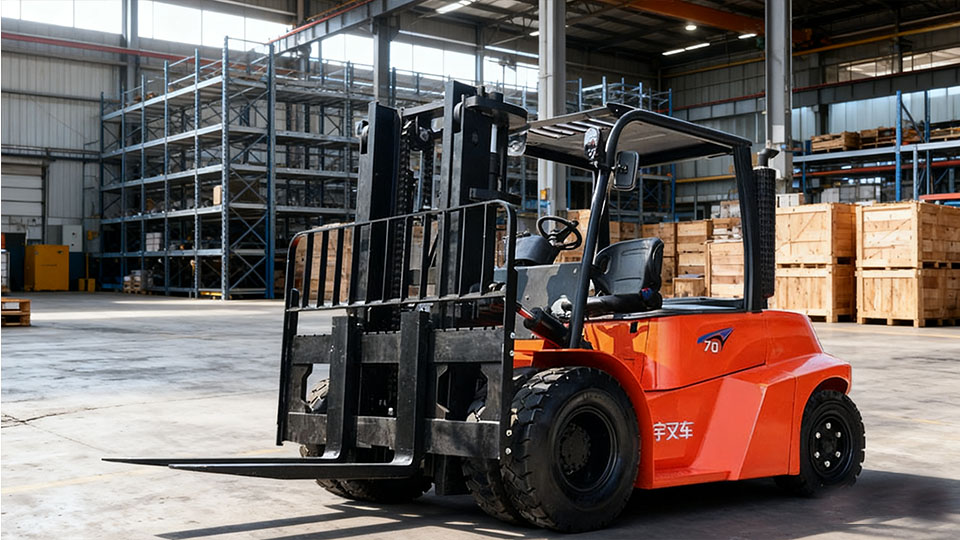
When traveling with a raised or extended load facing forward, several dangerous scenarios emerge. First, the forward-shifted center of gravity reduces the stability triangle—the imaginary area connecting the front and rear wheels where the combined center of gravity must remain to prevent tipping. Second, sudden braking or acceleration while facing forward can cause the load to shift or the forklift to tip forward, particularly when navigating ramps or uneven surfaces. Third, the momentum of the load continues forward during deceleration, creating dynamic forces that can exceed static stability calculations.
By driving in reverse with the load trailing behind, operators maintain several physical advantages. The load remains closer to the ground in typical travel position, lowering the overall center of gravity. The counterweight effect of the rear chassis becomes more effective when the load trails rather than leads. Most importantly, sudden stops transfer weight toward the rear of the forklift—the direction of the counterweight—rather than toward the front where the load creates a tipping moment. This configuration provides inherent stability that forward driving with a load cannot match.
Visibility and Operator Sight Lines
Modern forklifts are engineered with specific visibility constraints that make reverse driving operationally necessary. When carrying standard palletized loads, the mast, carriage, and load assembly typically obstruct 40-60% of the forward field of vision. A standard 48-inch pallet loaded to 60 inches high creates a blind spot extending 10-15 feet in front of the forklift, depending on mast configuration and load backrest design.
The technical specifications of forklift masts compound this visibility challenge. Standard two-stage masts (duplex) and three-stage masts (triplex) require significant structural elements—including lift chains, hydraulic cylinders, and channel rails—that create visual obstructions. Even with transparent load backrests or optimized mast designs, the physical presence of a loaded pallet makes forward visibility severely compromised.
Operating in reverse with an unladen forklift or trailing an empty attachment provides operators with unobstructed forward visibility through the mast structure. This visibility advantage becomes critical in high-traffic warehouses where pedestrians, racking systems, and other material handling equipment create complex navigation environments. The operator can maintain continuous visual contact with the travel path, intersection approaches, and potential hazards while the load follows in a predictable path behind.
Advanced forklift designs have attempted to address forward visibility through camera systems, mirrors, and transparent materials, but these technological solutions introduce their own limitations. Camera latency, limited field of view, and screen positioning create cognitive load that many safety studies suggest may be less effective than direct visual contact. Mirrors add blind spots and require significant operator training to interpret correctly. Consequently, even technologically equipped forklifts often default to reverse operation as the most reliable visibility solution.
Safety Systems and Operational Protocols
The dominance of reverse driving in forklift operations is codified in international safety standards and operational best practices. The Occupational Safety and Health Administration (OSHA) in the United States, along with equivalent bodies worldwide, establishes specific requirements for load travel positioning. These regulations typically mandate that loads be carried as low as possible and that operators maintain clear visibility of the direction of travel.
Forklift stability testing protocols, including the required tip-over stability tests defined by ISO 22915 and similar standards, evaluate vehicle performance under specific directional assumptions. These tests assume that loaded travel occurs with the load in the lowered position and that operators will travel in reverse when forward visibility is obstructed. The safety factors built into forklift design and rating plates assume operational compliance with these travel direction protocols.
Modern forklifts incorporate directional stability controls that actively manage travel parameters based on load status and direction. Travel speed limiters often engage when the mast is elevated or when sensors detect specific load characteristics. These systems are calibrated assuming reverse travel with loads, meaning that forward travel with loads may trigger conservative safety limitations that reduce operational efficiency. Operators learn to default to reverse travel to maintain optimal performance within these safety system constraints.
Pedestrian safety systems, including blue spotlights, zone lighting, and proximity alarms, are typically oriented to protect areas in the direction of forklift travel. When carrying loads forward, these safety systems may be blocked or misaligned, creating dangerous gaps in hazard warning coverage. Reverse travel ensures that warning systems project in the direction of movement, maintaining the intended safety envelope around the forklift.
Ergonomic Considerations and Operator Fatigue
The ergonomic design of forklift operator compartments influences reverse driving patterns in ways that might not be immediately obvious. Forklift seats and control positions are optimized for a specific operator orientation relative to the mast and load. When traveling forward with a load, operators must crane their necks, twist their torsos, or assume awkward postures to see around the obstruction. These positions create musculoskeletal strain over the course of a shift, contributing to fatigue and increasing the risk of chronic injuries.
Reverse driving allows operators to maintain neutral spine positions while observing the travel direction. The natural orientation of the body in the operator compartment—facing toward the rear of the forklift with the mast behind—aligns with the biomechanical advantages of reverse travel. Operators can use peripheral vision to monitor load stability while maintaining primary visual focus on the travel path ahead.
The repetitive nature of material handling operations amplifies these ergonomic considerations. A forklift operator might complete 50-100 transport cycles per hour in high-throughput environments. Each cycle involving forward travel with a load would require sustained awkward postures, while reverse travel allows natural positioning. Over the course of an 8-hour shift, this difference in biomechanical loading significantly impacts operator comfort, alertness, and long-term health outcomes.
Control ergonomics also favor reverse operation. Forklift directional controls, including steering wheels, hydraulic levers, and accelerator/brake pedals, are positioned for optimal access from the standard seated position. Traveling forward while looking backward requires operators to manipulate controls without direct visual confirmation, increasing cognitive load and response times. The standard reverse-driving posture maintains visual contact with both the travel path and the control interfaces.
Operational Efficiency and Facility Design
Warehouse and facility design has evolved around the assumption of reverse forklift travel, creating infrastructure that reinforces this operational mode. Aisle widths, intersection designs, and traffic flow patterns are calculated using forklift turning radius specifications that assume specific travel configurations. The minimum aisle width for a standard counterbalance forklift—typically 12-13 feet for 180-degree turns—assumes that the operator will approach the turn with the load trailing, execute the turn, and then back into the rack position.
Racking systems and storage configurations are designed with forklift reach and visibility constraints in mind. Standard selective rack configurations position pallets to be accessed with the forklift approaching perpendicular to the rack face. This geometry naturally leads to reverse travel patterns: the forklift approaches the rack facing forward (empty), picks the load, reverses out of the rack aisle, and then travels in reverse to the destination. Attempting to travel forward with the load through narrow aisles would create clearance issues and visibility challenges that reduce operational efficiency.
Traffic management systems in modern facilities often designate specific travel directions for loaded versus empty forklifts, creating one-way flow patterns that optimize for reverse travel with loads. These systems reduce congestion and improve safety by separating opposing traffic flows and establishing predictable movement patterns. Operators trained in these systems default to reverse travel as the standard operating procedure, creating consistent behaviors across shifts and facilities.
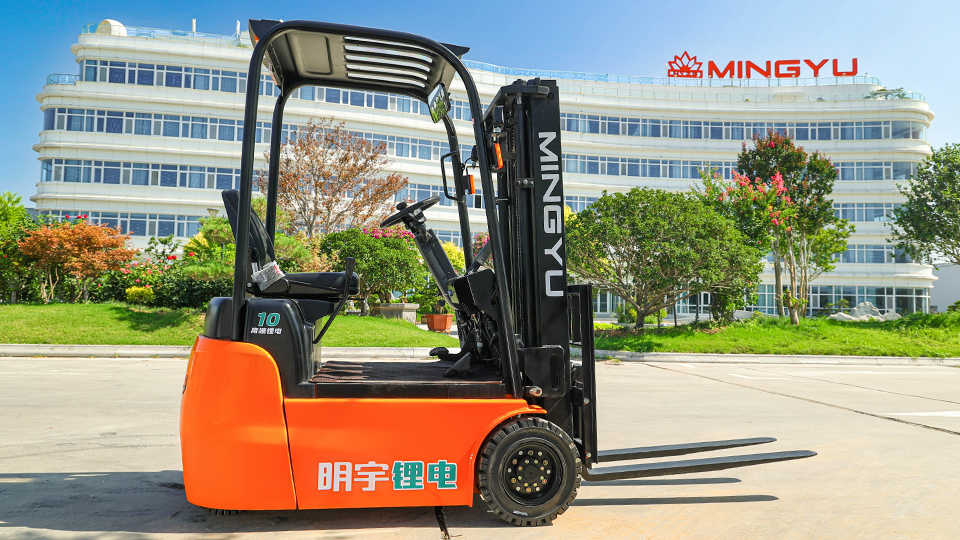
The time efficiency of reverse travel becomes apparent when analyzing complete material handling cycles. While forward travel might seem faster for covering distance, the total cycle time—including safe acceleration, navigation, and positioning at destination—often favors reverse travel. The ability to maintain higher average speeds safely, combined with more precise positioning at rack locations, reduces the total time per cycle despite lower maximum travel speeds.
Specialized Applications and Equipment Variations
Different forklift categories and specialized equipment modify but do not eliminate the prevalence of reverse driving. Reach trucks, designed for narrow aisle operation, extend their loads forward when retrieving or placing pallets but typically retract the mast for travel, effectively converting to a reverse-travel configuration with the load centered over the base. Order pickers and turret trucks utilize operator elevation and rotating masts to achieve forward visibility in specific applications, but these designs introduce complexity and cost that limit their deployment.
Rough terrain forklifts and telehandlers, used in outdoor and construction applications, face additional stability challenges from uneven surfaces that make reverse travel with loads even more critical. The combination of dynamic terrain forces and load momentum creates tipping hazards that are most effectively managed through reverse operation. These applications often involve carrying suspended loads or irregular materials where the center of gravity is less predictable, amplifying the stability benefits of trailing load configuration.
Automated guided vehicles (AGVs) and autonomous mobile robots (AMRs) in modern warehouses often replicate human operator behaviors, including reverse travel patterns, based on the same physical constraints. These systems use sensor arrays to navigate without visibility constraints, but stability algorithms and path planning still favor load-trailing configurations for dynamic stability. The persistence of reverse travel in autonomous systems demonstrates that this pattern emerges from fundamental physics rather than human operator limitations.
Training and Cultural Factors
Forklift operator training programs emphasize reverse travel as a core competency, creating institutional knowledge that perpetuates this operational mode. Certification curricula, including those meeting OSHA and international standards, dedicate significant attention to load stability, visibility management, and directional travel protocols. New operators enter the workforce with reverse driving as their default mental model, reinforced by trainer emphasis on safety statistics and incident analysis.
The cultural environment of material handling operations reinforces these training messages. Experienced operators mentor newcomers with reverse travel habits, and safety incident investigations consistently highlight forward travel with loads as a contributing factor in accidents. This cultural reinforcement creates self-perpetuating behavioral patterns that prioritize reverse travel even in situations where forward travel might be technically feasible.
Operational metrics and key performance indicators in warehouse management often indirectly favor reverse travel through safety and damage measurements. Facilities tracking product damage, near-miss incidents, or safety observations reward operational modes that minimize these metrics. Since reverse travel demonstrably reduces load drops, collisions, and tip-over incidents, operators and supervisors naturally gravitate toward this approach as a performance optimization strategy.
Conclusion
The prevalence of reverse driving in forklift operations emerges from a confluence of physical laws, engineering constraints, safety imperatives, and operational efficiencies that make this mode of travel technically superior for material handling. The stability advantages of maintaining the load trailing behind the center of gravity, combined with visibility requirements and ergonomic considerations, create an operational environment where reverse travel is not merely a preference but a fundamental requirement for safe and efficient operation.
As material handling technology evolves with automation, electrification, and advanced sensing systems, the basic physics of load stability and the geometry of warehouse operations ensure that reverse travel will remain a defining characteristic of forklift operation. Understanding these technical foundations helps operators, supervisors, and facility designers optimize their approaches to material handling safety and efficiency, recognizing that this counterintuitive driving pattern represents the accumulated wisdom of decades of industrial engineering and operational experience.
The next time you observe a forklift operator traveling in reverse through a warehouse aisle, recognize that you are witnessing the practical application of complex mechanical principles, safety engineering, and ergonomic science—all converging to move materials efficiently while protecting workers and infrastructure in demanding industrial environments.
Name: selena
Mobile:+86-13176910558
Tel:+86-0535-2090977
Whatsapp:8613181602336
Email:vip@mingyuforklift.com
Add:Xiaqiu Town, Laizhou, Yantai City, Shandong Province, China
