
vip@mingyuforklift.com
+86-0535-2090977

Forklift suspension systems represent a specialized domain of engineering distinct from conventional automotive applications. Unlike passenger vehicles designed primarily for ride comfort and handling performance across varied terrain, forklifts prioritize load stability, mast alignment precision, and operational safety in industrial environments. Understanding forklift suspension requires examining multiple system architectures, each optimized for specific operational requirements, load characteristics, and facility conditions. This technical analysis explores the suspension configurations employed across forklift categories, their engineering principles, maintenance requirements, and operational implications.
Solid Axle and Rigid Suspension Architectures
The predominant suspension configuration in counterbalance forklifts and many warehouse applications utilizes solid axle or rigid suspension designs. These systems eschew conventional springs and shock absorbers in favor of direct mounting of axles to chassis frames, creating fundamentally different operational characteristics than vehicles with compliant suspensions.
Solid rubber tire mounting provides the primary compliance mechanism in indoor electric forklifts and many internal combustion warehouse trucks. Solid pneumatic tires, constructed from rubber compounds with engineered hardness ratings, absorb minor surface irregularities through material deformation rather than mechanical suspension movement. These tires mount directly to drive axles and steer axles without intervening spring elements, creating a rigid connection between chassis and ground surface.
The engineering rationale for rigid suspension centers on mast stability requirements. Forklift masts must maintain precise vertical alignment during lifting operations to prevent load shifting, racking damage, and tip-over hazards. Any suspension compliance introducing mast movement relative to the chassis compromises operational safety and positioning accuracy. Rigid suspension eliminates variables affecting mast geometry, ensuring consistent fork positioning regardless of load weight or lift height.
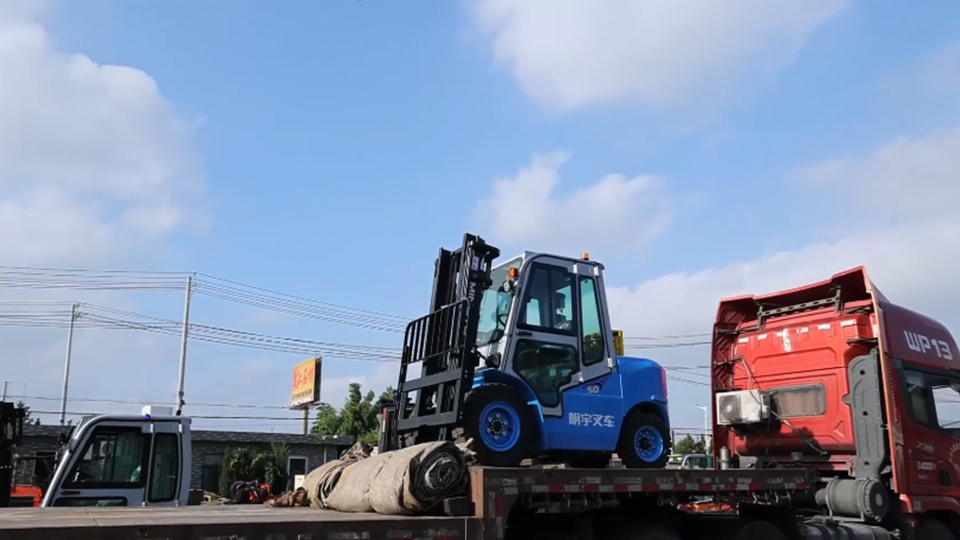
Drive axle configurations in electric forklifts frequently incorporate spring-loaded or hydraulic suspension elements specifically designed for traction optimization rather than ride comfort. These systems maintain drive wheel contact with uneven surfaces by allowing limited axle articulation relative to the chassis. The suspension travel remains minimal—typically less than 25 millimeters—and functions exclusively to prevent wheel lift during acceleration or braking rather than isolating operators from road vibration.
Solid axle designs simplify maintenance requirements, eliminating shock absorber replacement, spring inspection, and alignment procedures common to automotive applications. However, these systems transfer substantially all ground-induced vibration to operators and structural components, necessitating ergonomic interventions including vibration-dampening seats, isolated operator compartments, and reinforced mounting points for sensitive electronic systems.
Three-Point Suspension and Articulated Systems
Advanced forklift designs, particularly rough terrain forklifts and specialized outdoor applications, employ three-point suspension architectures that fundamentally differ from rigid configurations. These systems balance stability requirements with terrain adaptability through engineered articulation mechanisms.
The three-point suspension concept utilizes two fixed points on a rigid rear axle combined with a single pivoting front axle center point, or alternatively, two front fixed points with a central rear pivot. This geometry creates automatic leveling characteristics as the forklift traverses uneven terrain, maintaining wheel contact and chassis orientation without operator intervention. The pivot mechanism typically incorporates limited-range spring or hydraulic damping to control oscillation while permitting necessary articulation.
Telescopic handlers and rough terrain forklifts extensively employ three-point suspension to manage challenging ground conditions including construction sites, agricultural operations, and unpaved industrial yards. These vehicles must maintain stability while carrying suspended loads across irregular surfaces, requiring suspension systems that adapt to terrain without compromising load security. The three-point architecture provides this capability through geometric rather than compliant suspension elements.
Articulated steering systems, common in specialized narrow-aisle and multidirectional forklifts, inherently incorporate suspension-like characteristics through their pivot mechanisms. The articulated joint connecting front and rear chassis sections permits relative movement that absorbs surface irregularities while maintaining precise steering geometry. These systems require sophisticated hydraulic locking mechanisms that rigidly secure articulation during lifting operations, converting to compliant mode only during travel.
Load-sensing suspension systems represent evolutionary developments in three-point architectures. These configurations automatically adjust suspension characteristics based on detected load weight, lowering chassis height and increasing effective spring rates as loads increase. Electronic control systems monitor pressure in hydraulic suspension elements, implementing real-time adjustments that optimize stability for loaded conditions while preserving maneuverability when unladen.
Pneumatic Tire Suspension Characteristics
Forklifts equipped with pneumatic tires—both standard air-filled and solid pneumatic variants—exhibit suspension behaviors substantially different from cushion-tire models, despite frequently lacking conventional mechanical suspension systems.
Air-filled pneumatic tires function as primary suspension elements, with tire pressure and sidewall construction determining compliance characteristics. These tires absorb impacts through air compression and casing deformation, providing isolation from surface irregularities that rigid suspensions with solid tires cannot achieve. However, pneumatic tire compliance introduces mast movement considerations requiring operational compensation, particularly when lifting at maximum heights or handling unstable loads.
Solid pneumatic tires, constructed from cellular rubber compounds simulating air-filled tire characteristics without puncture vulnerability, provide intermediate compliance levels. These tires offer suspension-like energy absorption through material elasticity while maintaining greater stability than air-filled alternatives. The manufacturing process creates internal void structures that compress under load, generating spring rates tunable through compound formulation and void geometry.
Dual tire configurations on heavy-capacity forklifts create distributed load paths that effectively increase suspension compliance without mechanical systems. The slight variations in tire diameter and pressure between paired wheels allow load sharing that accommodates surface irregularities. This passive suspension effect requires careful tire maintenance to ensure matched characteristics, as significant pressure differentials compromise stability and induce uneven wear patterns.
Hydro-Pneumatic and Active Suspension Systems
Emerging forklift technologies incorporate sophisticated hydro-pneumatic and electronically controlled suspension systems previously restricted to high-performance automotive and aerospace applications. These systems address limitations of traditional forklift suspension while managing the unique stability requirements of material handling operations.
Hydro-pneumatic suspension utilizes nitrogen-filled accumulators combined with hydraulic cylinders to create variable spring rates and damping characteristics. Unlike mechanical springs with fixed rate curves, hydro-pneumatic systems provide progressive resistance that increases with compression, ideal for forklift applications requiring soft initial travel for ride quality transitioning to firm resistance for load stability. These systems enable active chassis leveling, maintaining constant ride height regardless of load weight through automatic pressure adjustment.
Electronically controlled active suspension represents the current technological frontier, employing sensor arrays, microprocessor control, and rapid-response hydraulic actuators to modify suspension characteristics in real-time. These systems can effectively decouple suspension functions between travel and lifting operations, providing compliant ride characteristics during transport while automatically rigidifying during mast elevation. Accelerometers detecting mast movement trigger instantaneous damping adjustments, suppressing oscillations that could compromise load security.
Cost considerations currently limit active suspension deployment primarily to high-value specialized applications including automated guided vehicles (AGVs) where precise path following requires vibration suppression, and high-reach forklifts operating in very narrow aisles where mast sway must be electronically controlled. As component costs decline and integration improves, broader adoption across standard forklift categories appears likely.
Operator Compartment Isolation Systems
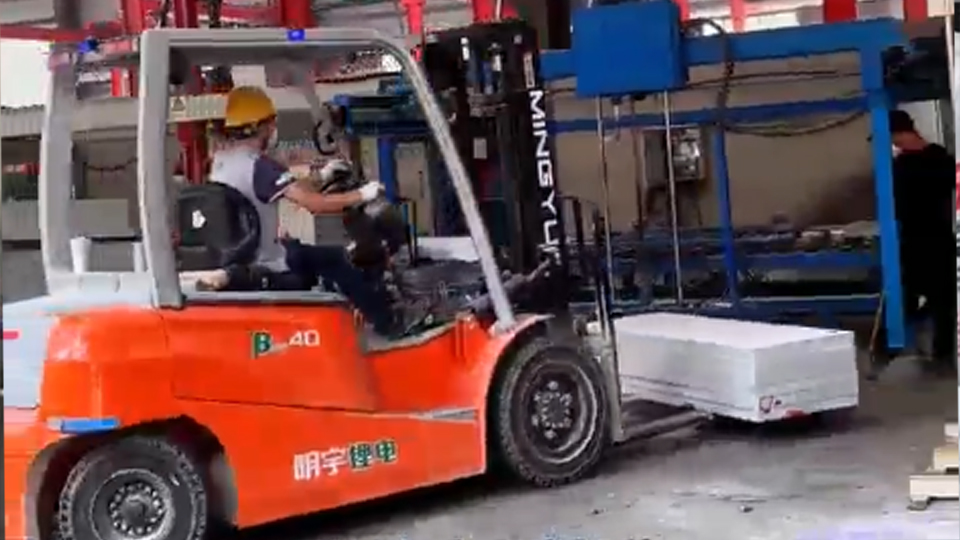
Given the prevalence of rigid chassis suspensions in forklift design, ergonomic engineering focuses increasingly on isolating operators from transmitted vibration rather than preventing vibration generation. These isolation systems functionally substitute for absent vehicle suspension, improving operator comfort and reducing fatigue-related safety risks.
Vibration-dampening seats represent primary isolation mechanisms, incorporating mechanical spring systems, air-ride suspensions, or elastomeric damping elements that attenuate high-frequency vibration transmission. Advanced seats offer multi-axis isolation, addressing vertical, horizontal, and rotational vibration components experienced during forklift operation. Suspension seat tuning must balance isolation effectiveness with stability perception, as excessive seat movement creates operator discomfort and control uncertainty.
Operator compartment mounting systems isolate entire cabs or platforms from chassis vibration through rubber isolation mounts or pneumatic suspension elements. These systems prove particularly effective for stand-up forklifts and reach trucks where operator weight represents significant proportion of total vehicle mass, making seat-based isolation insufficient. Cab suspension requires careful design to prevent relative movement between controls and operator position that could induce control input errors.
Floating floor designs in some high-capacity forklifts create secondary isolation through deck plates mounted independently of structural chassis elements. These systems address whole-body vibration concerns while maintaining rigid attachment points for mast and overhead guard structures. The engineering challenge involves preventing floor deformation under operator weight that could affect pedal positioning and control ergonomics.
Suspension Maintenance and Inspection Protocols
Forklift suspension systems, despite their mechanical simplicity compared to automotive applications, require systematic maintenance to ensure operational safety and performance characteristics.
Solid tire inspection protocols focus on tread wear patterns indicating alignment issues, chunking or tearing suggesting overload or impact damage, and compound degradation affecting traction and cushioning properties. Tire replacement criteria include wear to indicated tread depths, damage exposing internal reinforcing materials, or hardness changes affecting grip characteristics. Proper tire selection for application conditions—considering floor surfaces, environmental exposure, and load requirements—prevents premature failure and maintains designed suspension characteristics.
Pneumatic tire maintenance encompasses pressure monitoring, damage inspection, and replacement scheduling. Underinflation creates excessive sidewall flexure generating heat buildup and premature failure, while overinflation reduces compliance and increases impact transmission to chassis components. Pressure maintenance schedules must account for temperature variations affecting pressure readings and permeation losses occurring over service intervals.
Articulation point lubrication and wear inspection for three-point suspension systems prevents binding that could restrict movement or introduce play compromising stability. Pivot bushings, kingpins, and linkage components require periodic replacement based on wear measurements rather than fixed intervals, as operational environments dramatically affect service life. Hydraulic suspension systems demand fluid analysis, filter replacement, and seal inspection to prevent contamination-induced component failure.
Electronic suspension systems introduce diagnostic complexity requiring specialized equipment and training. Sensor calibration verification, actuator response testing, and control module software updates constitute maintenance elements absent from mechanical systems. Troubleshooting intermittent faults in active suspension networks demands systematic diagnostic approaches and access to manufacturer technical resources.
Operational Implications and Selection Criteria
Suspension system characteristics fundamentally influence forklift selection for specific applications, with inappropriate configuration choices generating safety hazards, productivity limitations, and excessive maintenance requirements.
Indoor concrete floor operations with smooth, level surfaces optimally suit rigid suspension configurations with cushion tires. These applications prioritize mast stability, turning radius minimization, and maintenance simplicity over ride quality considerations. The absence of surface irregularities eliminates suspension travel requirements, while precise load positioning demands the geometric consistency rigid systems provide.
Outdoor and rough terrain applications necessitate pneumatic tires and articulated suspension systems capable of accommodating surface variations without wheel lift or chassis instability. Construction sites, lumber yards, and agricultural operations require suspension travel sufficient to maintain traction and load security across irregular ground. The stability trade-offs inherent in compliant suspensions are managed through operational limitations on lift heights and travel speeds when carrying suspended loads.
Very narrow aisle applications present unique suspension requirements balancing maneuverability with high-reach stability. Articulated designs and turret trucks employ specialized suspension configurations permitting operation in confined spaces while maintaining mast rigidity essential for elevated load handling. These systems frequently incorporate active stabilization technologies addressing the inherent challenges of high-center-of-gravity operations in constrained environments.
Automated guided vehicle applications demand suspension characteristics optimizing path following precision and sensor stability. AGV suspension systems minimize vertical movement affecting navigation sensor positioning while providing sufficient compliance to maintain wheel contact across facility floor irregularities. The suspension tuning for automated operation differs substantially from operator-driven vehicles, prioritizing sensor stability over human comfort considerations.
Future Developments and Technological Trajectories
Forklift suspension technology continues evolving in response to automation requirements, ergonomic regulations, and operational efficiency demands.
Electromagnetic suspension systems, currently in developmental stages for material handling applications, offer potential advantages in rapid response and energy recuperation. These systems could enable active load stabilization during transport, potentially allowing higher travel speeds with suspended loads through real-time center-of-gravity management. Implementation challenges include power consumption, system weight, and cost considerations currently limiting commercial deployment.
Predictive maintenance integration through suspension monitoring sensors enables condition-based service scheduling rather than interval-based maintenance. Accelerometers and displacement sensors detecting suspension performance degradation provide early warning of component wear, tire condition changes, or alignment drift requiring intervention. This data-driven approach optimizes maintenance resource allocation while preventing catastrophic failures through timely component replacement.
Modular suspension architectures may emerge allowing field reconfiguration for changing operational requirements. Quick-change axle assemblies or adjustable suspension modules could enable single forklift platforms to transition between indoor and outdoor applications, or standard and high-stability configurations, through component substitution rather than dedicated vehicle procurement.
Conclusion
Forklift suspension systems encompass diverse engineering approaches optimized for specific operational requirements rather than universal application. From the rigid suspensions dominating warehouse operations to sophisticated active systems emerging in specialized applications, these configurations reflect fundamental trade-offs between stability, adaptability, comfort, and cost. Understanding suspension characteristics enables informed equipment selection, appropriate maintenance planning, and safe operational practices that maximize productivity while minimizing risk. As material handling technology advances, suspension systems will increasingly incorporate electronic control and active management, expanding capabilities while introducing new complexity in maintenance and operation.
Name: selena
Mobile:+86-13176910558
Tel:+86-0535-2090977
Whatsapp:8613181602336
Email:vip@mingyuforklift.com
Add:Xiaqiu Town, Laizhou, Yantai City, Shandong Province, China
