
vip@mingyuforklift.com
+86-0535-2090977

For decades, the material handling industry has maintained a clear demarcation: internal combustion (IC) forklifts, particularly those powered by diesel, were the undisputed workhorses for heavy loads, extended shifts, and rugged outdoor terrain. Electric forklifts, conversely, were seen as the clean, quiet, but ultimately weaker alternative, relegated primarily to indoor, light-to-medium duty operations.
This technical article asserts that this traditional view is rapidly becoming obsolete. Propelled by transformative advancements in electric drivetrain technology, power electronics, and, most critically, high-energy-density Lithium-Ion (Li-ion) batteries, modern electric forklifts are now challenging the dominance of diesel models in increasingly demanding applications, including high-capacity lifting and intensive, multi-shift operations.
The comparison is no longer a simple matter of diesel power versus battery life; it is a complex assessment of torque delivery, energy efficiency, duty cycle management, and the Total Cost of Ownership (TCO) in modern logistics environments.
I. Power and Torque: The Electric Advantage
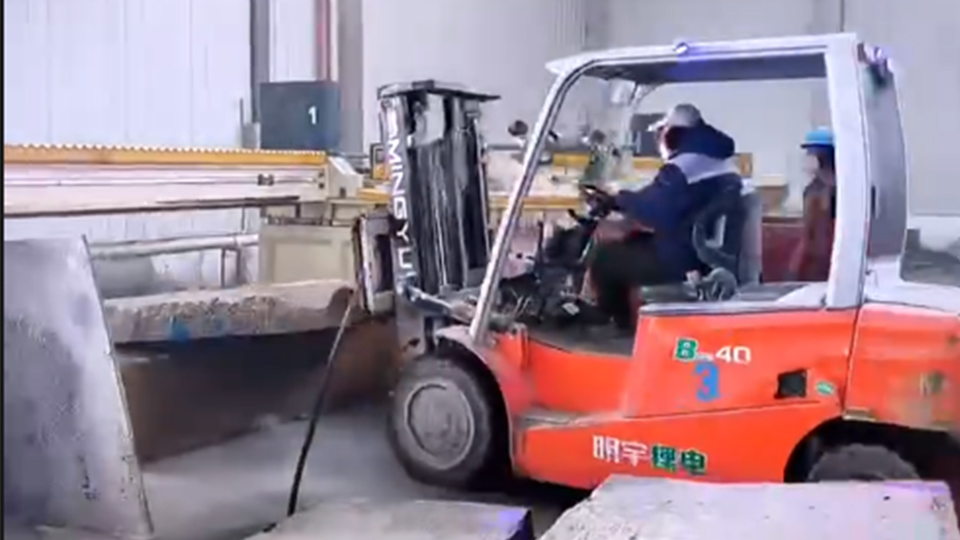
The perceived superiority of the diesel engine rests primarily on its raw power output. However, a technical analysis of the electric motor reveals an inherent advantage in usable power and torque characteristics for material handling.
1. Torque Delivery Profile
Diesel engines achieve peak torque at a specific, higher RPM range, necessitating complex transmissions (manual or automatic) to keep the engine within its optimal operating band during lifting and acceleration.
Electric motors, typically three-phase AC induction or permanent magnet synchronous motors (PMSM), follow a fundamentally different performance curve:
Maximum Torque at Zero RPM: Electric motors deliver their maximum static torque instantly from a standstill (zero speed). This characteristic is critically important in forklifts, as the highest torque demand occurs precisely at the moment of initial acceleration or when beginning a lift of a heavy load.
Smooth Power Curve: The power delivery is exceptionally smooth and precise, allowing for fine control and eliminating the shudder and jolt associated with clutch engagement and gear shifts in IC trucks. This precision is vital for high-stacking operations and handling fragile loads.
In terms of quantifiable metrics, while a large diesel engine might produce a higher absolute horsepower ($P$), the electric motor delivers a superior profile of starting torque ($T_{\text{start}}$), making it highly effective for the instantaneous demands of lifting and inching heavy loads.
2. High-Voltage Architecture
Modern heavy-duty electric forklifts are moving away from traditional 48V or 80V lead-acid systems and utilizing high-voltage (HV) architectures (e.g., 96V, 120V, or higher).
The relationship between power, voltage, and current is given by:
$$P = V \times I \times \text{Efficiency} (\eta)$$
By increasing the system voltage ($V$), the required current ($I$) to achieve the same power output ($P$) is reduced. Lower current leads to:
Reduced Heat Generation: Less heat dissipated in the motors, controllers, and cables ($P_{\text{loss}} \propto I^2R$), increasing component lifespan and efficiency.
Higher Power Density: Allows for smaller, lighter cables and controllers without sacrificing performance.
This HV technology has enabled manufacturers to produce electric counterbalance trucks with capacities ranging from 10,000 lbs (4.5 tonnes) up to 36,000 lbs (16+ tonnes), effectively closing the capacity gap for all but the most extreme port and container-handling applications. Case studies have shown successful replacement of 8-tonne diesel trucks with equivalent electric models in demanding industries like paper/pulp and metal fabrication.
II. Duty Cycle and Uptime: The Battery Revolution
Historically, the Achilles' heel of the electric forklift in heavy-duty applications was the battery: low energy density, long charge times, and performance degradation. The introduction and rapid adoption of Lithium-Ion (Li-ion) battery technology has fundamentally altered the duty cycle calculation.
1. Energy Density and Voltage Consistency
|
Feature |
Lead-Acid Battery |
Diesel/LPG |
Lithium-Ion (Li-ion) |
|
Charge Efficiency |
$\approx 75-80\%$ |
N/A (Fueling is $100\%$) |
$\approx 90-95\%$ |
|
Charging Time |
8-10 hours (plus 8-hour cool-down) |
5 minutes |
1-2 hours (full charge) |
|
Performance Curve |
Voltage/Power declines rapidly after $40\%$ discharge |
Consistent until fuel is depleted |
Flat Voltage Curve: Consistent power until nearly depleted |
|
Opportunity Charging |
Detrimental to lifespan |
N/A |
Highly supported, extending runtime indefinitely |
The flat voltage discharge curve of Li-ion is a critical technical advantage. Diesel performance is consistent until refuelling, but lead-acid performance perceptibly wanes throughout a shift. Li-ion maintains consistent, high power output until the Battery Management System (BMS) mandates a recharge, meaning heavy loads are handled with the same speed and capacity at the beginning and near the end of the charge cycle.
2. Continuous Operation through Opportunity Charging
The ability of Li-ion batteries to accept high-rate charge without suffering degradation (a process known as opportunity charging) is the key to matching the continuous runtime of a diesel forklift.
A diesel truck runs as long as the fuel tank holds, requiring a 5-minute refill downtime.
A Li-ion electric truck can operate continuously across multiple shifts (24/7) using strategic charging sessions:
Breaks/Lunches: Short 15-30 minute charging sessions replenish significant energy (e.g., $1\%$ charge per $\approx 80$ seconds).
Shift Changes: Longer charge periods (1-2 hours) can fully top-up the battery.
This system replaces the complex, labor-intensive, and hazardous process of swapping heavy lead-acid batteries with a simple plug-in procedure, eliminating the downtime penalty previously associated with electric fleets.
III. Environmental and Operational Suitability
While diesel forklifts retain an advantage in extreme outdoor conditions (e.g., very uneven, unpaved surfaces) due to chassis size and pneumatic tires, the electric forklift is increasingly versatile and superior in mixed-use or controlled environments.
1. Controlled Efficiency and Regenerative Braking
Electric motors exhibit superior energy efficiency compared to IC engines, which lose a significant portion of energy as waste heat. Furthermore, electric forklifts leverage regenerative braking.
In IC forklifts, deceleration energy is lost as heat via friction brakes. In electric models, during braking or when lowering a load, the drive and lift motors act as generators, converting kinetic and potential energy back into electrical energy and returning it to the battery. This system:
Extends Runtime: Up to $15\%$ of energy consumption can be recovered, significantly boosting the effective runtime in high-cycle operations.
Reduces Component Wear: Minimizes wear on friction brakes, further lowering maintenance costs.
2. Environmental Ruggedness
Modern electric designs address the traditional concerns about outdoor and wet operations:
Inversion Protection: Motors, controllers, and power electronic components are increasingly rated to high Ingress Protection (IP) standards (e.g., IP65 or higher), providing robust sealing against water spray, dust, and debris.
Thermal Management: Li-ion batteries are equipped with sophisticated Battery Management Systems (BMS) that include temperature control and balancing, allowing the trucks to operate safely and effectively in cold storage environments or high-heat foundry applications where IC performance can degrade.
3. Safety and Compliance
In any facility, but especially in heavy manufacturing and logistics, the safety and compliance advantages of electric trucks are non-negotiable:
Zero Emissions: Essential for all indoor areas (steel mills, warehouses, manufacturing plants) where diesel exhaust (CO, $\text{NO}_{\text{x}}$, DPM) is a significant health hazard.
Lower Noise and Vibration: Reduces operator fatigue and improves safety communication, critical in noisy, high-traffic industrial settings.
IV. The Total Cost of Ownership (TCO) Shift
The final technical argument for the electric forklift is economic. While the Initial Purchase Price (IPP) of an HV electric forklift with a Li-ion battery remains higher than a comparable diesel model, the TCO favors the electric option over the typical 5-10 year lifecycle.
|
Cost Component |
Diesel Forklift |
Electric Forklift (Li-ion) |
Impact on TCO |
|
Fuel/Energy Cost |
High (Fluctuating Diesel Price) |
Low (Stable Electricity Price) |
Significant Long-Term Savings |
|
Maintenance |
High (Engine, filters, oil, transmission, exhaust systems) |
Very Low (Fewer moving parts, no fluids) |
Drastic Reduction |
|
Downtime |
Low (Quick Refuel) |
Near Zero (Opportunity Charging) |
Increased Productivity and Throughput |
|
Battery/Fuel System Life |
Engine Overhaul/Replacement |
Li-ion Cycle Life: $3,000-5,000$ cycles ($\approx 7-10$ years) |
Highly Favorable |
The absence of an internal combustion engine and transmission removes numerous high-cost, high-wear components, shifting maintenance from frequent, complex mechanical servicing to simple electrical and tire checks. This reduction in operating expense, combined with enhanced productivity from near-zero downtime, often results in a Return on Investment (ROI) and TCO that outpaces diesel, even for demanding applications.
Conclusion: Electric Power is the Future Standard
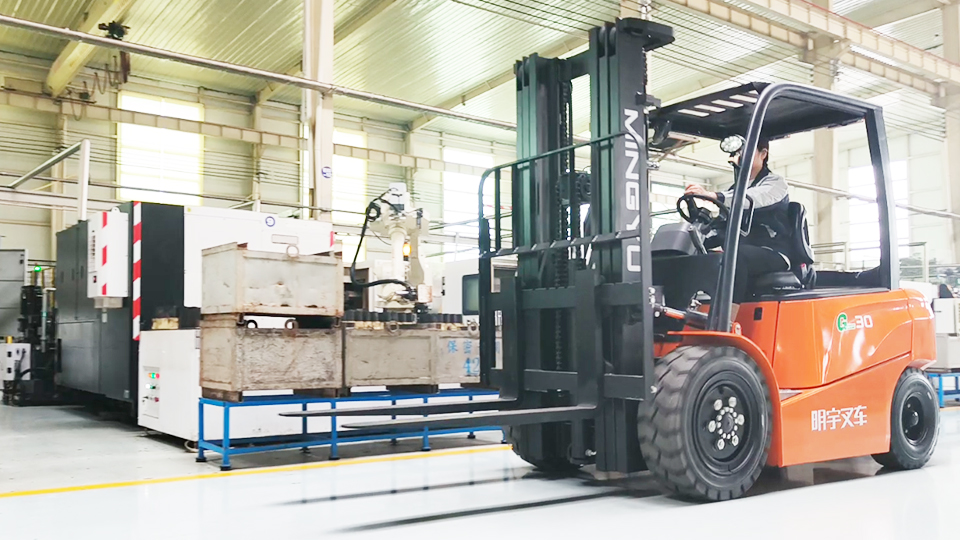
The question "Can electric forklifts handle heavy loads and demanding applications like a diesel forklift?" can now be answered with a qualified Yes, for the majority of heavy-duty applications.
The technological evolution has bridged the gap:
Power: Advanced electric drive systems provide superior instantaneous torque and precise control.
Capacity: High-voltage systems support electric counterbalance models capable of lifting well over 16 tonnes.
Uptime: Lithium-ion technology, enabled by rapid opportunity charging, achieves continuous, 24/7 operational availability, effectively neutralizing the diesel refueling advantage.
For organizations seeking to maximize safety, minimize emissions, and achieve a lower Total Cost of Ownership without sacrificing heavy-duty performance, the modern, high-capacity electric forklift is not merely a viable alternative—it is the emerging technical standard.
Name: selena
Mobile:+86-13176910558
Tel:+86-0535-2090977
Whatsapp:8613181602336
Email:vip@mingyuforklift.com
Add:Xiaqiu Town, Laizhou, Yantai City, Shandong Province, China
