
vip@mingyuforklift.com
+86-0535-2090977

Introduction
Forklifts, also known as powered industrial trucks or lift trucks, represent the backbone of modern material handling operations across virtually every industrial sector. From massive distribution centers processing millions of packages daily to construction sites moving heavy building materials, these versatile machines enable the efficient movement, stacking, and storage of goods that drives global commerce. Understanding the various forklift classifications and their specific applications is essential for operations managers, safety professionals, and procurement specialists seeking to optimize their material handling capabilities while ensuring workplace safety and regulatory compliance.
The Industrial Truck Association (ITA) and Occupational Safety and Health Administration (OSHA) have established standardized classification systems that categorize forklifts into seven distinct classes based on power source, tire type, and intended operating environment . This article provides a detailed technical examination of these classifications and explores the specialized forklift types that serve diverse industrial applications.
The Seven Standard Forklift Classifications
Class I: Electric Motor Rider Trucks
Class I forklifts represent the most common type of electric-powered material handling equipment in industrial settings. These battery-operated machines feature sit-down operator compartments and utilize either cushion or pneumatic tires depending on surface requirements. The defining characteristic of Class I trucks is their reliance on large industrial batteries—typically 24 to 96 volts—as both a power source and counterweight mechanism .
Technical specifications for Class I forklifts typically include load capacities ranging from 3,000 to 15,000 pounds, with three-wheel configurations offering enhanced maneuverability in tight spaces. These machines excel in indoor environments such as food storage facilities, retail distribution centers, pharmaceutical warehouses, and manufacturing plants where zero emissions and minimal noise pollution are critical requirements . The absence of exhaust fumes eliminates ventilation concerns, while electric motors provide smooth acceleration and precise positioning capabilities that improve operational efficiency in confined areas.
Recent technological developments have significantly enhanced Class I forklift performance. Lithium-ion battery systems, now adopted by leading manufacturers including Toyota, KION, and Chinese producers like Heli and Hangcha, offer faster charging times, longer service life, and higher energy density compared to traditional lead-acid batteries . These advancements enable continuous operation in high-throughput environments while reducing maintenance requirements and total cost of ownership.
Class II: Electric Motor Narrow Aisle Trucks
Class II forklifts address the growing demand for high-density storage solutions in modern warehousing. These specialized machines are engineered to operate in aisle widths significantly narrower than those required by standard counterbalance forklifts—often less than half the width of conventional warehouse aisles . The category encompasses several distinct machine types including reach trucks, order pickers, turret trucks, and side loaders, each optimized for specific narrow-aisle applications.
Reach trucks represent the most prevalent Class II configuration, featuring telescoping mast assemblies that extend forward to access deep storage racks while the chassis remains stationary within the aisle. These machines routinely achieve lift heights exceeding 30 feet, with some specialized models reaching 40 feet or higher. Stabilizing legs provide essential support when handling heavy loads at elevation, while advanced mast damping systems minimize sway during high-rise operations .
Order pickers, another critical Class II variant, revolutionize piece-picking operations by elevating the operator platform alongside the forks. This configuration enables direct access to individual items stored at various heights without requiring pallet retrieval, significantly improving efficiency in e-commerce fulfillment and distribution operations where single-item picking constitutes up to 65% of operating costs .
Class III: Electric Motor Hand Trucks or Hand/Rider Trucks
Class III encompasses the diverse category of walk-behind and walkie-rider electric forklifts designed for low-intensity material handling applications. These machines bridge the gap between manual material handling and full-sized rider forklifts, offering powered lifting and transportation capabilities in compact, maneuverable packages .
The category includes electric pallet jacks (walkies), which utilize hydraulic systems to lift pallets several inches off the floor for horizontal transport; walkie stackers, which provide vertical stacking capability up to 12 feet; and low-lift platform trucks for moving non-palletized loads. Load capacities typically range from 2,000 to 6,000 pounds, with operating speeds optimized for pedestrian traffic environments .
Class III trucks prove particularly valuable in loading dock operations, retail backrooms, and manufacturing work cells where full-sized forklifts would create congestion hazards. Their compact dimensions enable operation in standard doorways and elevators, while their relatively low cost and minimal maintenance requirements make them economically attractive for facilities with intermittent material handling needs.
Class IV: Internal Combustion Engine Trucks (Cushion Tires)
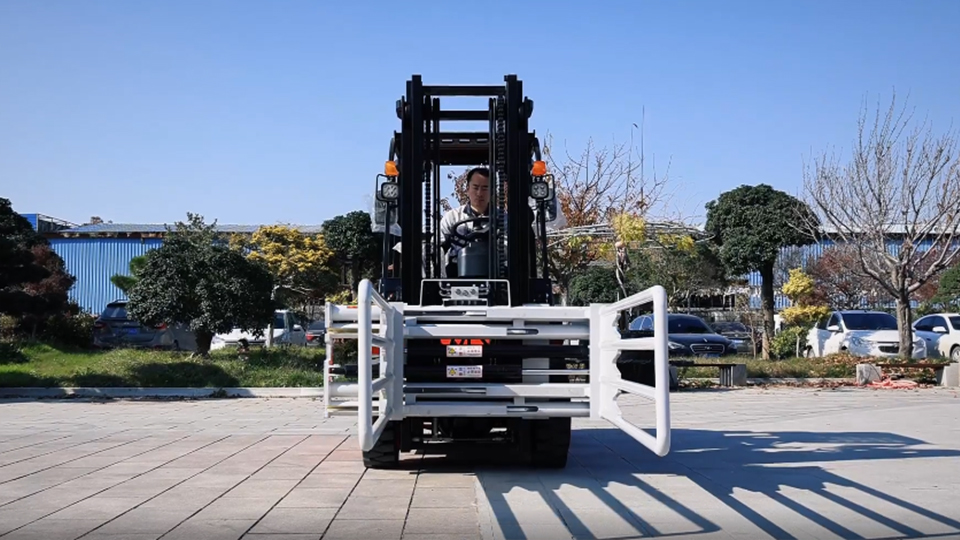
Class IV forklifts utilize internal combustion engines—typically fueled by gasoline, diesel, or liquefied petroleum gas (LPG)—combined with solid cushion tires designed for smooth, hard indoor surfaces. These machines represent a traditional mainstay of industrial material handling, offering robust performance characteristics and lower initial acquisition costs compared to electric alternatives .
The cushion tire configuration, featuring solid rubber bonded to steel bands, provides a low profile and tight turning radius that enhances maneuverability in confined warehouse environments. These tires eliminate puncture risks and maintain consistent ground clearance, though their lack of shock absorption limits application to relatively smooth concrete or asphalt surfaces. Class IV forklifts typically demonstrate load capacities between 3,000 and 15,000 pounds, with larger industrial models exceeding 30,000 pounds for heavy manufacturing applications .
Environmental and safety considerations increasingly influence Class IV deployment decisions. While these machines offer extended operating range and rapid refueling advantages, their exhaust emissions require adequate ventilation in indoor settings. Underwriters Laboratories (UL) ratings further classify these trucks based on spark and fire protection levels, with Type G and GS designations indicating gasoline-powered machines with progressively enhanced safeguards against combustion hazards .
Class V: Internal Combustion Engine Trucks (Pneumatic Tires)
Class V forklifts share the internal combustion powertrains of Class IV machines but employ pneumatic tires that enable versatile indoor-outdoor operation. These air-filled tires, similar to automotive configurations, provide shock absorption and traction across varied surfaces including gravel, packed earth, and uneven pavement .
The pneumatic tire configuration significantly expands operational flexibility, allowing these forklifts to transition seamlessly between warehouse interiors and outdoor storage yards, loading docks, or construction staging areas. This versatility has established Class V as the most widely deployed forklift category globally, particularly in lumber yards, building supply centers, and manufacturing facilities with diverse material flow requirements .
Modern Class V forklifts incorporate advanced emissions control systems, hydrostatic transmissions, and ergonomic operator compartments that rival electric models in comfort and controllability. Fuel options have expanded beyond traditional gasoline and diesel to include compressed natural gas (CNG) and clean-burning LPG variants that reduce environmental impact while maintaining performance characteristics .
Class VI: Electric and Internal Combustion Engine Tractors
Class VI designates powered industrial trucks designed primarily for towing rather than lifting applications. These tractors, available in both electric and internal combustion configurations, pull carts, trailers, and dollies containing materials across extensive industrial facilities .
With minimum towing capacities of 1,000 pounds and typical configurations handling significantly heavier loads, Class VI tractors serve critical roles in airport baggage handling, automotive assembly line sequencing, and large-scale distribution center operations. Their design emphasizes sustained travel speed and drawbar pull rather than vertical lifting capability, with specialized hitch configurations accommodating various trailer types .
Class VII: Rough Terrain Forklift Trucks
Class VII encompasses specialized forklifts engineered for operation on unimproved natural terrain and disturbed construction sites. These machines feature substantial ground clearance, aggressive tread patterns, and robust chassis construction that withstands harsh outdoor conditions .
Three distinct subcategories comprise Class VII: vertical mast rough terrain forklifts with conventional lifting geometry; telescopic boom handlers (telehandlers) combining forklift and crane functionality; and truck-mounted portable units transported to job sites for unloading operations. Telehandlers have gained particular prominence in construction and agriculture, offering forward reach capabilities up to 50 feet and lift heights exceeding 70 feet with appropriate stabilizer deployment .
Specialized Forklift Types and Applications
Beyond the standard classification system, industry-specific requirements have driven development of specialized forklift variants optimized for unique material handling challenges.
Side Loaders
Side loaders address the handling of elongated materials—timber, steel beams, pipes, and sheet goods—that prove unwieldy for conventional front-loading forklifts. These machines capture loads from the side using overhead clamping mechanisms, eliminating the need for wide turning radii to maneuver lengthy items . Multi-directional variants enable travel in any direction while carrying loads, maximizing stability and safety when transporting bulky materials through narrow spaces.
Telehandlers
Telehandlers represent a hybrid category combining forklift functionality with telescopic boom crane capabilities. These machines utilize extendable boom assemblies with integrated fork carriages or specialized attachments to place materials at height and distance from the machine base. Modern telehandlers incorporate advanced load management systems, outrigger stabilization, and precision controls that enable safe operation in construction, agriculture, and energy sector applications .
Automated Guided Vehicles (AGVs)
AGVs represent the convergence of material handling equipment and autonomous robotics. These self-guided forklifts navigate predetermined paths using magnetic tape, laser guidance, or vision-based systems, executing material transport tasks without direct operator intervention . AGV implementations deliver consistent performance in 24/7 operations while eliminating operator fatigue factors and reducing workplace injury risks associated with manual forklift operation.
Heavy-Duty and Specialized Industrial Forklifts
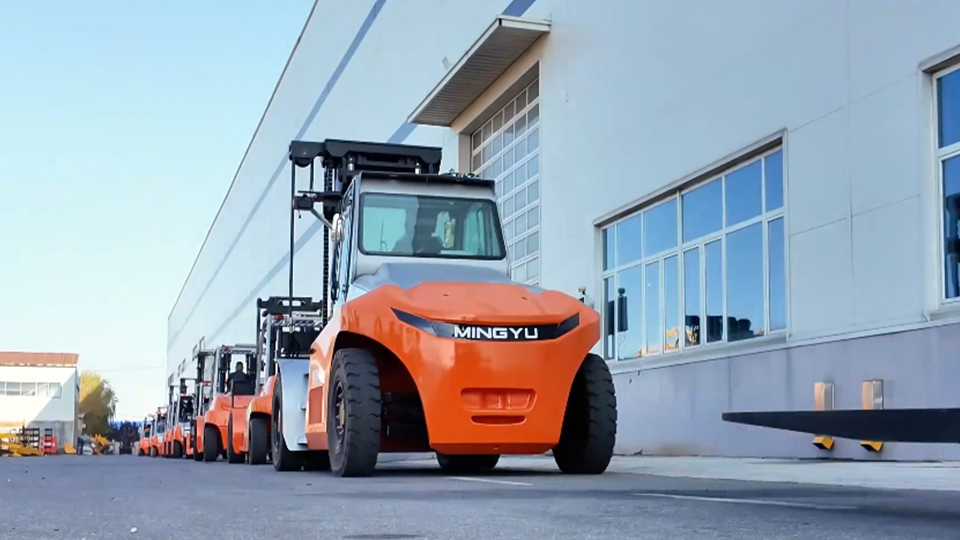
Extreme material handling applications require forklifts with capacities exceeding standard industrial ranges. Heavy-duty models rated for 30,000 to 100,000+ pounds serve port operations, steel mills, and heavy manufacturing facilities. These specialized machines incorporate reinforced masts, multiple axles, and customized stability systems engineered for specific load characteristics .
Selection Criteria and Operational Considerations
Effective forklift specification requires systematic evaluation of operational parameters including load characteristics (weight, dimensions, center of gravity), vertical and horizontal travel requirements, surface conditions, environmental constraints, and duty cycle intensity. Regulatory compliance mandates operator certification specific to the forklift classes utilized, with OSHA requiring formal training programs covering equipment-specific operational characteristics and hazards .
Total cost of ownership calculations must incorporate acquisition costs, energy or fuel expenses, maintenance requirements, and residual value considerations. The ongoing transition toward electrification, driven by environmental regulations and operational cost advantages, increasingly favors electric classifications for indoor applications while maintaining internal combustion options for demanding outdoor environments.
Conclusion
The diverse forklift classifications and specialized machine types available to industry reflect the evolving complexity of modern material handling requirements. From compact electric pallet jacks facilitating retail stock replenishment to massive rough terrain telehandlers serving construction mega-projects, each forklift category delivers optimized capabilities for specific operational contexts. As automation technologies advance and sustainability imperatives intensify, the forklift industry continues innovating to meet the material handling challenges of increasingly sophisticated global supply chains.
Name: selena
Mobile:+86-13176910558
Tel:+86-0535-2090977
Whatsapp:8613181602336
Email:vip@mingyuforklift.com
Add:Xiaqiu Town, Laizhou, Yantai City, Shandong Province, China
