
vip@mingyuforklift.com
+86-0535-2090977

Introduction
The stability triangle represents one of the most critical safety concepts in material handling operations, serving as the fundamental geometric framework that governs forklift stability and prevents catastrophic tip-over accidents. Understanding this invisible three-dimensional zone is essential for forklift operators, safety managers, and maintenance personnel seeking to maintain safe working environments while maximizing operational efficiency. According to OSHA statistics, tip-overs account for approximately 42% of all forklift accidents, making mastery of stability triangle principles a paramount concern for industrial safety programs .
This article provides an in-depth technical examination of the stability triangle concept, exploring its geometric foundation, physical principles, operational implications, and practical applications in modern material handling environments.
Geometric Foundation of the Stability Triangle
The stability triangle derives from the three-point suspension system that characterizes counterbalanced forklift design. Unlike conventional four-wheeled vehicles that distribute weight across four contact points, forklifts utilize a unique suspension geometry where the rear axle serves as a pivot point rather than a fixed wheel base. When viewed from overhead, three critical points define the stability triangle: the two front load-bearing wheels (Points B and C) and the center pivot point of the rear steer axle (Point A) .
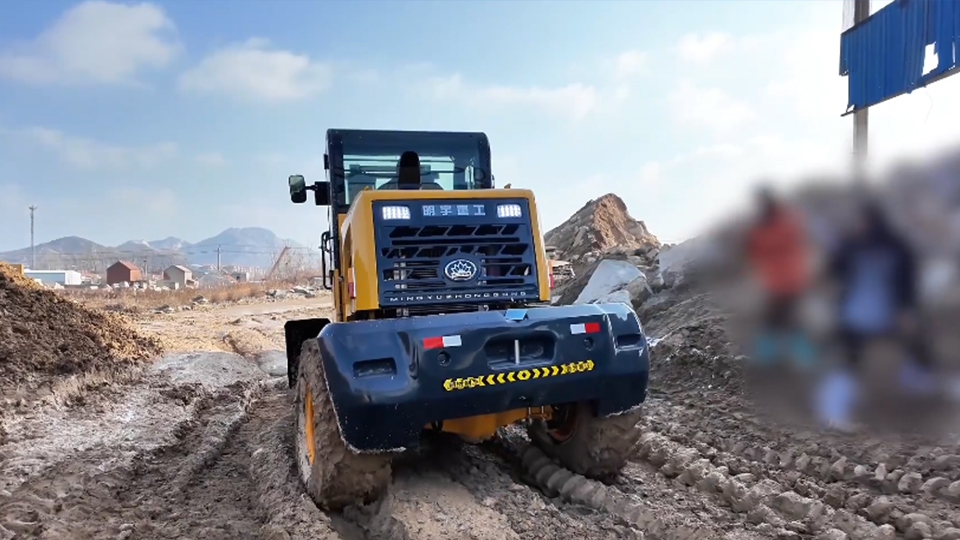
Connecting these three points with imaginary lines creates an isosceles triangle that extends from the rear axle pivot forward to the front wheels. The base of this triangle corresponds to the distance between the front wheels, while the apex rests at the rear axle center. This triangular footprint represents the stable operating zone within which the combined center of gravity of the forklift and its load must remain to prevent tipping .
The three-point suspension system enables the rear wheels to maintain constant ground contact while accommodating uneven surfaces through oscillation of the rear axle. This design provides superior traction and maneuverability but creates the critical stability constraint that operators must continuously manage. The stability triangle is not a physical structure but rather a virtual geometric construct that helps visualize the complex balance dynamics governing safe forklift operation .
Center of Gravity Dynamics
Understanding the stability triangle requires comprehensive knowledge of center of gravity (CG) principles as they apply to forklift operations. Two distinct center of gravity points must be considered: the forklift's own center of gravity and the combined center of gravity when carrying a load .
Unloaded Forklift Center of Gravity
An unloaded forklift maintains its center of gravity positioned low and toward the rear of the machine, typically located within the counterweight mass between the rear axle and the operator compartment. The substantial counterweight—often comprising cast iron or concrete blocks weighing several thousand pounds—ensures that the empty forklift's center of gravity remains comfortably within the stability triangle, providing inherent resistance to rearward tipping .
The counterweight serves a dual function: balancing front-loaded cargo and positioning the unloaded center of gravity optimally within the stability envelope. This rearward bias ensures that acceleration, grade climbing, and dynamic forces do not shift the center of gravity beyond the rear apex of the stability triangle.
Combined Center of Gravity
When a load is placed on the forks, the system center of gravity shifts forward toward the load. The combined center of gravity represents the balance point of the entire mass system—forklift plus load—and its position determines stability. The magnitude of forward shift depends on load weight and the horizontal distance of the load's center of gravity from the front wheels .
As load weight increases or as the load center moves farther from the mast, the combined center of gravity advances toward the front axle line. When the combined center of gravity reaches the forward edge of the stability triangle (the line connecting the front wheels), the forklift approaches its maximum stable capacity. Any further forward shift results in longitudinal instability and forward tipping risk .
Longitudinal and Lateral Stability Concepts
The stability triangle framework encompasses two distinct stability dimensions that operators must simultaneously manage: longitudinal stability and lateral stability .
Longitudinal Stability
Longitudinal stability refers to the forklift's resistance to tipping forward or backward along its primary axis of travel. This dimension primarily concerns forward tipping when heavy loads shift the combined center of gravity toward the front wheels. However, rearward tipping remains a concern during rapid acceleration, descending steep grades, or carrying elevated empty forks .
The longitudinal stability margin decreases as loads are raised higher. Elevating a load raises the combined center of gravity vertically, effectively reducing the stability triangle's effective base and amplifying any forward gravitational moment. This explains why maximum load capacity ratings decrease at higher lift heights—a 5,000-pound capacity at ground level may reduce to 3,000 pounds or less at full mast extension .
Lateral Stability
Lateral stability describes resistance to sideways tipping, which typically occurs during turns, on sloped surfaces, or when operating on uneven terrain. The stability triangle's width (distance between front wheels) determines lateral stability limits. When the combined center of gravity shifts beyond the triangle's side boundaries due to centrifugal forces during turning or gravitational components on cross slopes, the forklift becomes susceptible to rollover .
Lateral stability considerations become particularly critical when operating with elevated loads, as the raised center of gravity increases the overturning moment generated by lateral forces. The basic physics principle applies: the higher the center of gravity, the smaller the lateral disturbance required to initiate tipping.
Dynamic Stability and Operational Factors
Static stability analysis provides the foundation, but real-world forklift operation involves continuous dynamic forces that challenge stability margins. Dynamic stability encompasses the additional stability considerations arising from motion, acceleration, braking, and mast operation .
Inertial Forces
Sudden acceleration generates rearward inertial forces that shift the effective center of gravity toward the rear of the stability triangle. Conversely, abrupt braking creates forward inertial forces that compound the gravitational moment of elevated loads. Sharp turns generate centrifugal forces that push the effective center of gravity laterally toward the outside of the turn radius .
These dynamic forces explain why safe operating procedures emphasize smooth, gradual control inputs. Jerky acceleration, emergency braking, or high-speed turning can generate inertial loads sufficient to shift the effective center of gravity beyond stability triangle boundaries even when static load conditions appear safe.
Mast Tilt Effects
Mast tilt angle significantly influences stability by shifting the load's center of gravity relative to the forklift chassis. Tilting the mast backward moves the load center rearward, enhancing stability by shifting the combined center of gravity deeper into the stability triangle. Forward tilt has the opposite effect, advancing the load center and reducing stability margins .
Standard operating procedures require backward tilt during travel to maximize stability and prevent load spillage. The degree of allowable tilt depends on load characteristics and travel conditions, with limited forward tilt permitted only for load placement and retrieval operations.
Terrain and Environmental Influences
Operating surface conditions dramatically affect stability triangle geometry through chassis orientation. When a forklift operates on a slope, the stability triangle tilts with the chassis, effectively reducing the stable zone in the downhill direction while expanding it uphill. Cross slopes create lateral gravitational components that shift the center of gravity toward the downhill side of the stability triangle .
Uneven surfaces, potholes, or debris can induce sudden chassis tilting that instantaneously shifts stability triangle orientation. Outdoor operations on unpaved surfaces require particular vigilance, as terrain irregularities can generate unexpected stability challenges even at low speeds.
Load Center and Capacity Relationships
The load center concept directly connects to stability triangle physics. Defined as the horizontal distance from the front face of the forks to the load's center of gravity, the load center determines the leverage exerted by the cargo. Standard forklift capacity ratings assume a 24-inch load center representing a uniform 48-inch cube positioned on standard pallets .
When actual load centers exceed the rated dimension, capacity must be derated to maintain stability. A load with a 36-inch center generates 50% greater overturning moment than a 24-inch load of identical weight, effectively reducing safe capacity by approximately one-third. This relationship explains why long loads, off-center loads, or non-uniform cargo require careful stability assessment even when gross weight remains within nominal capacity ratings .
Load height also influences stability through the line of action principle. The line of action represents an imaginary vertical line extending from the combined center of gravity to the ground. For stable operation, this line must intersect the ground within the stability triangle boundaries. As loads are elevated, the line of action's ground intersection point moves, effectively reducing stability margins .
Stability Triangle in Specialized Equipment
While the classic stability triangle concept originated with counterbalanced forklifts, similar principles apply to specialized material handling equipment with modified geometries.
Telehandler Stability Considerations
Telehandlers (telescopic boom handlers) present unique stability challenges due to their extended reach capabilities. These machines utilize a stability triangle formed by the front wheels and rear axle pivot, but the triangle's effective size changes dynamically as the boom extends and elevates. Raising and extending the boom simultaneously shrinks the stability triangle while shifting the center of gravity outward, creating compound stability risks .
Telehandler operation requires sophisticated load management systems that continuously calculate stability margins based on boom angle, extension, load weight, and chassis orientation. Many modern units incorporate automatic stability monitoring that prevents operation outside safe parameters.
Reach Trucks and Narrow Aisle Equipment
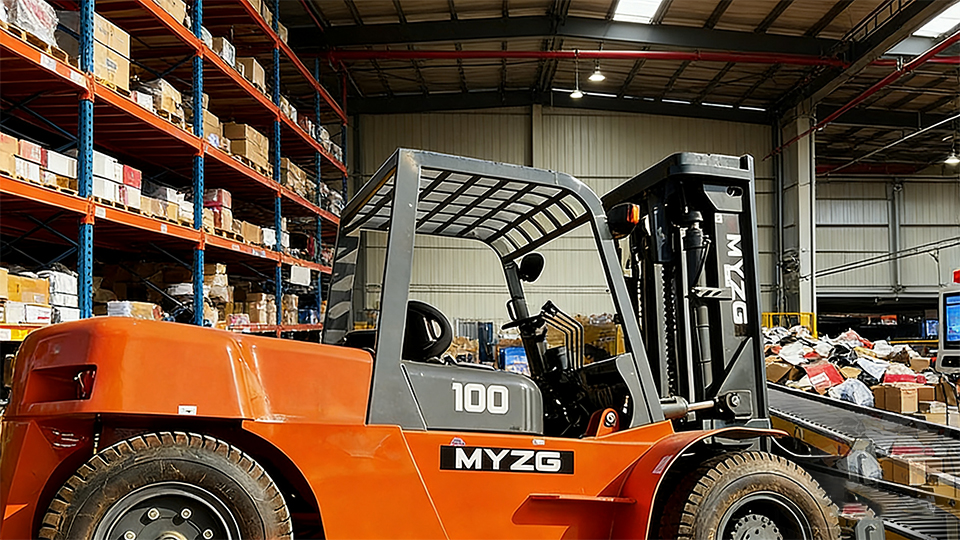
Reach trucks operate within a modified stability framework due to their extended mast reach mechanisms. When the mast carriage extends forward to access deep rack storage, the load center advances significantly beyond the base chassis dimensions. These machines rely on substantial base weights and outrigger systems to maintain stability during reach operations, effectively expanding the stability triangle's forward boundary during extended positions .
Practical Stability Management Strategies
Effective stability management requires systematic operational protocols that address both equipment configuration and human factors.
Pre-Operational Assessment
Operators must verify load weight and center of gravity location before lifting. Irregularly shaped loads, engines, or machinery with non-uniform weight distribution require special estimation techniques to determine effective load centers. Data plates provide capacity information for specific load centers and heights, serving as critical reference tools for safe operation .
Load Positioning Protocols
Optimal load positioning keeps the combined center of gravity as low and rearward as possible. Loads should be positioned against the mast carriage, centered on the forks, and carried at minimum practical height during travel. The recommended 4-6 inch ground clearance during transport minimizes the vertical center of gravity while accommodating surface irregularities .
Environmental Adaptations
Slope operation requires specific techniques: ascending with the load upgrade and descending with the load downgrade maintains the center of gravity within the stability triangle. Empty forklifts should travel with forks downgrade to prevent rearward tipping. Cross-slope operation should be minimized, and turning on slopes avoided entirely due to compounded lateral and longitudinal stability risks .
Emergency Response Procedures
Despite preventive measures, tip-over incidents may occur. Current safety research indicates that operators should remain seated during tipping events, bracing against the steering wheel and leaning away from the impact direction. Attempting to jump clear often results in crushing injuries beneath the overhead guard or mast assembly .
Training and Regulatory Compliance
OSHA regulations mandate comprehensive training programs covering stability triangle concepts for all powered industrial truck operators. Effective training combines classroom instruction on stability physics with practical demonstrations showing how load position, elevation, and dynamic forces affect stability margins. Operators must demonstrate competency in stability assessment before certification .
Regular refresher training reinforces stability principles and addresses complacency that develops with routine operations. Incident investigations frequently reveal that experienced operators violated basic stability protocols, suggesting that familiarity can breed dangerous shortcuts.
Conclusion
The stability triangle represents a fundamental safety concept that translates complex physics into an intuitive geometric framework for forklift operation. Understanding that safe operation requires maintaining the combined center of gravity within the triangular zone formed by the front wheels and rear axle pivot enables operators to make informed decisions about load handling, travel speeds, and environmental adaptations.
As material handling equipment evolves with automation and advanced stability control systems, the underlying physics remain constant. Whether operating conventional counterbalanced forklifts, sophisticated telehandlers, or automated guided vehicles, the stability triangle principles continue governing safe material handling. Comprehensive training, disciplined operational procedures, and continuous vigilance ensure that this invisible geometric zone remains a protective boundary rather than a limiting constraint on productivity.
Name: selena
Mobile:+86-13176910558
Tel:+86-0535-2090977
Whatsapp:8613181602336
Email:vip@mingyuforklift.com
Add:Xiaqiu Town, Laizhou, Yantai City, Shandong Province, China
