
vip@mingyuforklift.com
+86-0535-2090977

Introduction
In the demanding world of material handling and warehouse operations, dual-fuel forklifts have established themselves as indispensable assets, offering the operational flexibility to switch between gasoline and liquefied petroleum gas (LPG) based on availability, cost, and application requirements. These versatile machines represent significant capital investments, with typical acquisition costs ranging from $20,000 to $50,000 depending on capacity and specifications. More importantly, the total cost of ownership over a 10-to-15-year service life often exceeds the initial purchase price by factors of three to five when maintenance, fuel, downtime, and eventual replacement are considered.
The difference between a forklift that struggles through a abbreviated seven-year lifespan plagued by reliability issues and one that delivers consistent performance for fifteen years or more frequently comes down to maintenance philosophy and execution. This comprehensive guide examines the critical maintenance strategies that directly impact longevity for dual-fuel forklifts, providing actionable insights for fleet managers, maintenance supervisors, and technicians committed to maximizing return on equipment investment.
Understanding Lifespan Determinants in Dual-Fuel Systems
The Compounding Complexity Factor
Dual-fuel forklifts inherently contain more components, connection points, and potential failure modes than single-fuel alternatives. Each fuel system—gasoline and LPG—includes tanks, lines, filters, regulators, and delivery mechanisms that require maintenance attention. The integration components, including fuel selectors, electronic control modules, and modified combustion systems, add further complexity. This compounding complexity means that maintenance oversights in dual-fuel systems often cascade into multiple component failures rather than isolated incidents.
Research across industrial fleets consistently demonstrates that dual-fuel forklifts receiving comprehensive maintenance programs achieve operational lifespans averaging 12-15 years, while those maintained reactively—fixing only what breaks—typically require replacement after 7-9 years. The maintenance investment differential between these approaches typically represents 15-25% higher annual costs for comprehensive programs, but the extended lifespan and reduced downtime generate lifetime cost savings of 40-60%.
Operating Environment Impact
Environmental factors dramatically influence lifespan expectations and maintenance requirements. Forklifts operating in refrigerated environments face condensation issues that accelerate corrosion in fuel systems and electrical components. Dusty or dirty applications, such as lumber yards or recycling facilities, contaminate air filtration systems and cooling components at accelerated rates. Outdoor operations expose equipment to weather extremes that degrade seals, hoses, and protective coatings.
Understanding these environmental impacts enables targeted maintenance interventions that address specific degradation mechanisms. Rather than applying generic maintenance schedules, lifespan-focused maintenance programs adapt protocols to actual operating conditions, allocating resources where they generate maximum longevity returns.
Engine Longevity Through Fuel System Excellence
Combustion Quality Management
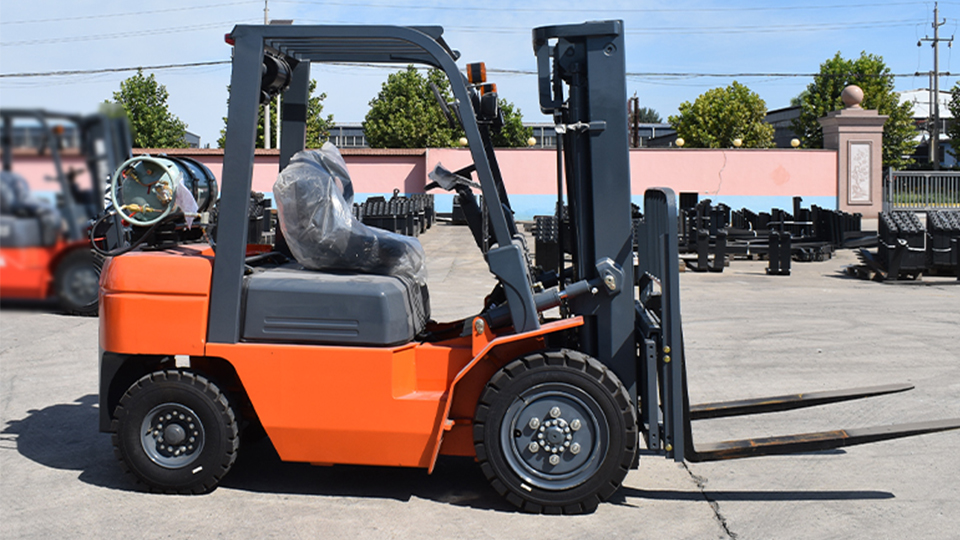
Engine longevity in dual-fuel applications depends fundamentally on combustion quality, which varies significantly between gasoline and LPG operation. LPG burns cleaner than gasoline, producing fewer combustion chamber deposits and reduced crankcase contamination, but requires precise air-fuel mixture control to prevent damaging lean or rich conditions. Gasoline operation, particularly with modern ethanol blends, introduces varnish and deposit formation that progressively degrade combustion efficiency and increase mechanical wear.
Implementing rigorous fuel system maintenance protocols ensures optimal combustion regardless of fuel selection. For LPG systems, this means maintaining vaporizer and regulator performance to deliver consistent fuel pressure and complete vaporization. Liquid propane entering the combustion chamber causes immediate damage to valves, pistons, and rings through hydraulic lock and wash-down of protective lubricant films. Daily verification of vaporizer coolant flow and temperature, combined with regular pressure testing of the entire LPG delivery system, prevents these catastrophic failures.
Gasoline system maintenance focuses on injection precision and fuel quality protection. Injector spray patterns degrade over time due to deposit accumulation, creating uneven fuel distribution that causes localized hot spots, detonation, and accelerated wear. Periodic injector cleaning—either through fuel additives or direct cleaning procedures—maintains spray pattern integrity. Fuel filter replacement at intervals shorter than manufacturer recommendations protects precision injector components from wear-causing contamination.
Lubrication System Optimization
Engine oil serves as the lifeblood of longevity, and dual-fuel engines present unique lubrication challenges. LPG combustion produces different byproduct profiles compared to gasoline, with generally lower acid formation but potential for fuel dilution if carburetion or injection settings drift rich. Oil analysis programs provide quantitative data on lubricant condition, revealing contamination patterns, additive depletion rates, and early indicators of internal wear.
Extending oil change intervals beyond manufacturer recommendations based solely on operating hours ignores the reality of fuel-specific degradation patterns. Instead, condition-based oil changes using analysis data optimize lubricant life while ensuring protection. Typical dual-fuel forklifts benefit from oil analysis every 250 operating hours, with changes triggered by analysis results rather than arbitrary schedules.
Oil filter quality significantly impacts longevity. High-capacity filters with advanced media remove smaller particles for extended periods, maintaining cleaner oil that reduces wear across all engine components. The modest additional cost of premium filtration generates substantial returns through extended engine life and reduced component replacement.
Cooling System: The Foundation of Thermal Management
Heat Load Management
The cooling system in dual-fuel forklifts manages thermal loads from both engine combustion and LPG vaporization. This dual function makes cooling system maintenance particularly critical for longevity. Inadequate cooling causes immediate performance degradation and progressive damage to head gaskets, valve seats, and piston rings through overheating. For the LPG system, insufficient vaporizer heating causes liquid fuel delivery that damages engines while creating safety hazards.
Scaling and corrosion within the cooling system reduce heat transfer efficiency over time, creating gradual performance degradation that often goes unnoticed until failure occurs. Periodic cooling system flushing with appropriate chemical cleaners removes scale deposits and restores heat exchange capacity. Maintaining proper coolant chemistry—correct antifreeze concentration and supplemental coolant additives—prevents corrosion that damages radiator tubes, cylinder head passages, and water pump components.
The water pump, often overlooked until failure, warrants preventive replacement based on service life rather than waiting for catastrophic failure. Pump bearing wear and seal degradation progress gradually, with early symptoms including coolant weepage and minor temperature fluctuations. Addressing these indicators before complete failure prevents the overheating damage that often accompanies pump seizure.
Airflow Management
Cooling efficiency depends equally on airflow through radiators and across engine components. External fouling of radiator fins with debris, dust, or chemical deposits insulates the heat exchanger and reduces cooling capacity. Regular cleaning with compressed air or water, depending on debris type, maintains design airflow rates. Internal radiator blockage from scale or corrosion products requires more aggressive intervention including chemical flushing or radiator replacement.
Fan system maintenance ensures adequate airflow across the radiator matrix. Belt-driven fans require tension monitoring and periodic replacement to prevent slippage that reduces airflow. Electric fan systems depend on sensor accuracy and motor reliability—testing fan activation at temperature thresholds verifies proper control system function.
Fuel System Component Longevity Strategies
LPG System Preservation
LPG system components face unique longevity challenges related to pressure cycling, thermal shock, and seal degradation. Pressure regulators and vaporizers experience thermal cycling with every engine start and shutdown, causing expansion and contraction that stresses seals and diaphragms. Over time, these cycles cause hardening and cracking of elastomeric components, leading to fuel leaks and performance degradation.
Preventive replacement of seals and diaphragms based on service hours rather than waiting for failure extends component life and prevents the secondary damage that leaks cause. Regulator rebuild kits, properly installed, restore original performance specifications at fraction of replacement cost. Documenting rebuild histories supports warranty claims and regulatory compliance while optimizing lifecycle costs.
Fuel tank longevity depends on proper handling and protective measures. Physical damage from impact, corrosion from environmental exposure, and internal contamination from moisture or debris all reduce tank service life. Protective collars, proper mounting security, and regular internal inspection—where regulations permit—identify degradation before catastrophic failure. Tank recertification requirements vary by jurisdiction, but proactive assessment often reveals issues that scheduled replacement prevents.
Gasoline System Durability
Gasoline system longevity focuses on corrosion prevention and contamination control. Ethanol-blended fuels, now standard in most markets, absorb moisture from atmosphere and cause phase separation that damages fuel system components. Keeping tanks adequately full reduces headspace where condensation occurs, while fuel stabilizers and phase separation inhibitors extend storage life.
Fuel line and connection integrity prevents the evaporative losses and safety hazards of leakage. Modern fuel injection systems operate at higher pressures than historical carbureted designs, increasing stress on hoses, clamps, and connection points. Regular pressure testing and visual inspection identify degradation before failure occurs. Using ethanol-compatible hose materials prevents the degradation that causes line rupture and fire hazards.
Electrical System Reliability for Extended Service
Battery and Charging System Management
Battery lifespan in forklift applications typically ranges from three to five years, but proper maintenance can extend this toward the upper limit while ensuring reliable starting and electrical system performance. Maintenance-free batteries reduce watering requirements but still need terminal cleaning, hold-down verification, and charging system testing. Conventional batteries require disciplined watering with distilled water, avoiding both low levels that expose plates and overfilling that causes acid spillage.
Charging system output verification ensures batteries receive proper charge without overcharging that causes electrolyte loss and plate damage. Voltage regulator function, alternator output, and belt condition all influence charging effectiveness. Electrical system voltage stability also protects sensitive electronic control modules that manage dual-fuel operation—voltage spikes or chronic undercharging cause module failures that are expensive to diagnose and replace.
Wiring Harness and Connection Integrity
Electrical system longevity depends heavily on connection integrity and harness protection. Corrosion at connectors causes voltage drops, intermittent faults, and ultimately connection failure. Dielectric grease application at service intervals prevents moisture ingress and corrosion formation. Harness protection from abrasion, heat damage, and chemical exposure prevents insulation breakdown that causes short circuits and fire hazards.
The sophisticated engine control systems in modern dual-fuel forklifts incorporate numerous sensors and actuators with specific voltage and resistance requirements. Maintaining connector integrity and following proper diagnostic procedures prevents the module damage that occurs when technicians force connections or apply incorrect test equipment.
Hydraulic System Longevity
Fluid Cleanliness and Component Protection
Hydraulic system lifespan correlates directly with fluid cleanliness. Contamination causes pump wear, valve sticking, cylinder scoring, and seal damage that progressively degrades performance and causes failures. Maintaining cleanliness requires attention to reservoir sealing, breather function, filter condition, and fluid handling procedures during service.
Filter elements trap particulate contamination, but saturated filters bypass contaminants or restrict flow that causes cavitation and pump damage. Monitoring filter condition indicators and replacing elements at appropriate intervals—not just when fully clogged—maintains system cleanliness without excessive restriction. Return line filters, pressure filters, and case drain filters each serve specific protection functions requiring individual attention.
Fluid analysis extends beyond engine oil to hydraulic systems, revealing contamination patterns, additive depletion, and moisture content that indicate service needs or developing problems. Water in hydraulic fluid causes pump cavitation, valve corrosion, and seal degradation that reduces system lifespan significantly.
Cylinder and Seal Preservation
Hydraulic cylinder longevity depends on rod protection and seal maintenance. Damaged or degraded rod wipers allow contamination entry that scores rods and damages piston seals. Regular wiper inspection and replacement prevents contamination ingress. Cylinder rod coatings—typically chrome plating—protect against corrosion and wear, but damage to these coatings accelerates degradation and requires cylinder repair or replacement.
Seal materials must be compatible with hydraulic fluid specifications and operating temperatures. Incompatible seals swell, harden, or degrade, causing internal leakage that reduces efficiency and external leakage that creates safety hazards. Using manufacturer-specified seal materials during maintenance ensures compatibility and longevity.
Structural and Mechanical Longevity
Mast and Carriage Maintenance
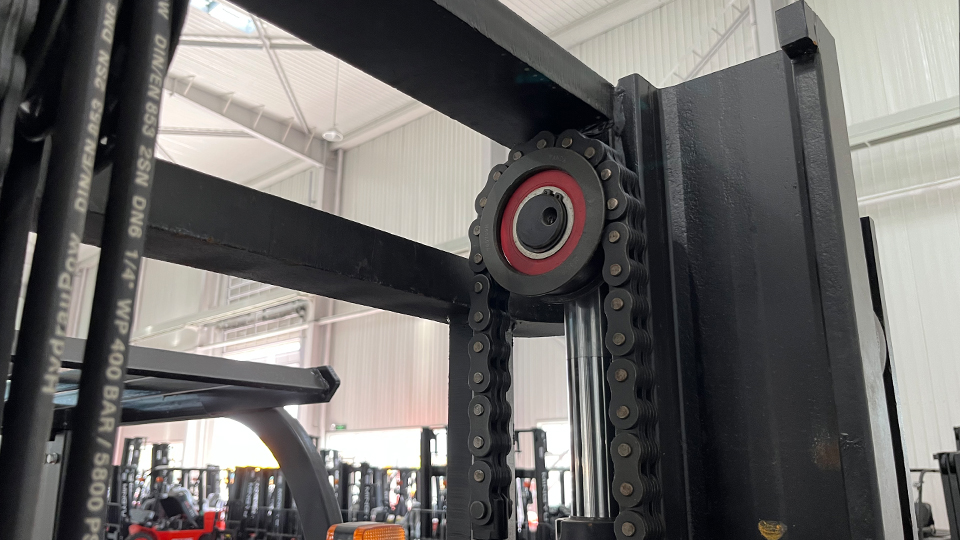
The mast assembly represents one of the most expensive components to replace, making preventive maintenance essential for longevity. Lift chains require lubrication at specified intervals to prevent wear and elongation that affects load handling precision. Chain anchor points experience concentrated stress and require inspection for wear, cracking, or deformation. Chain rollers and guide shoes wear progressively, with excessive wear causing binding and accelerated chain wear.
Carriage and fork integrity directly impacts safety and longevity. Crack detection inspection, particularly at the heel area where stress concentrates, prevents catastrophic failure under load. Fork alignment verification ensures even load distribution that reduces mast stress and wear. Attachment interfaces require inspection for wear, cracking, and proper security that prevents damage to both attachments and carriage components.
Frame and Structural Integrity
The forklift frame provides the structural foundation for all other components, and its longevity depends on corrosion protection and damage prevention. Environmental exposure, particularly in outdoor or corrosive environments, degradates protective coatings and exposes base metal to rust formation. Regular cleaning, touch-up painting, and application of protective compounds extends frame life significantly.
Impact damage from collision, overloading, or improper operation creates stress concentrations that propagate cracking and structural failure. Operator training and supervision reduce impact frequency, while periodic structural inspection identifies damage before it progresses to failure. Weld inspection at high-stress areas, including mast mounting points and counterweight attachments, verifies structural integrity.
Tire and Running Gear Longevity
Tire Preservation Strategies
Tires represent significant consumable expense, but proper maintenance extends service life substantially. Inflation pressure maintenance prevents uneven wear, casing damage, and bead separation. Overinflation causes center wear and reduced traction, while underinflation generates excessive heat, sidewall damage, and premature failure. Daily pressure verification catches slow leaks before they cause damage.
Wheel alignment and load distribution influence tire wear patterns. Misalignment causes feathering and irregular wear that reduces tire life and indicates chassis or steering component problems requiring correction. Load rating compliance prevents overloading that exceeds tire capacity and causes immediate damage or accelerated wear.
For cushion tire applications common in warehouse environments, floor condition significantly impacts tire life. Rough, debris-covered, or damaged floor surfaces accelerate tire wear and damage. Facility maintenance that keeps floors clean and repaired extends tire life while improving ride quality and load handling stability.
Brake System Longevity
Brake system lifespan depends on adjustment accuracy, contamination prevention, and component quality. Improperly adjusted brakes drag continuously, generating heat that degrades friction materials and hydraulic components. Regular adjustment to manufacturer specifications ensures proper release and full friction material utilization.
Contamination from hydraulic fluid, grease, or environmental sources reduces friction coefficient and causes uneven braking. Protecting friction surfaces from contamination during maintenance and cleaning contaminated surfaces immediately preserves braking effectiveness and component life.
Operator Influence on Equipment Longevity
Training and Behavior Impact
Operator technique influences equipment lifespan as significantly as maintenance quality. Proper startup procedures, including adequate warm-up before load application, reduce thermal shock and wear. Smooth acceleration and deceleration minimize drive train stress. Proper load handling—centered loads, appropriate mast tilt, and controlled lowering speeds—reduces structural and hydraulic system stress.
Fuel selection and switching practices also impact longevity. Operating on inappropriate fuel for conditions, or switching fuels improperly, causes performance problems and potential damage. Comprehensive operator training on dual-fuel system operation and limitations prevents misuse that reduces equipment life.
Reporting and Early Intervention
Operators who perform daily inspections and report abnormalities enable early intervention that prevents minor issues from becoming major failures. Establishing clear reporting channels and responsive maintenance support encourages operator engagement in equipment preservation. Ignoring operator reports or delaying response to identified problems trains operators to stop reporting, allowing degradation to progress unaddressed.
Documentation and Lifecycle Management
Maintenance History Value
Comprehensive maintenance documentation supports longevity in multiple ways. Warranty claims require service records demonstrating proper maintenance. Troubleshooting recurring problems requires historical data identifying patterns and previous interventions. Residual value at disposal depends heavily on documented maintenance quality—buyers pay premiums for equipment with complete service histories.
Digital maintenance management systems enhance documentation value through data analytics that optimize maintenance intervals, predict component failures, and track lifecycle costs. These systems enable evidence-based decisions about repair versus replacement, major overhauls, and fleet renewal timing.
Planned Component Replacement
Strategic component replacement before failure—based on statistical life data and condition monitoring—prevents the secondary damage that often accompanies catastrophic failure. This approach requires investment in components that have remaining service life, but generates returns through avoided emergency repairs, reduced downtime, and extended major component life.
Developing replacement schedules for high-wear components based on operating hours and condition assessment data optimizes lifecycle costs. Water pumps, fuel pumps, hydraulic pumps, and similar rotating components particularly benefit from planned replacement that prevents the engine or system damage that accompanies failure.
Conclusion
Extending dual-fuel forklift lifespan requires comprehensive maintenance strategy addressing the unique requirements of dual-fuel integration while maintaining fundamental equipment care standards. Success depends on understanding the interaction between fuel systems, engine, and support components, then implementing disciplined maintenance protocols that address actual degradation mechanisms rather than generic schedules.
The investment in extended lifespan maintenance generates substantial returns through reduced capital expenditure, improved operational reliability, and enhanced safety performance. Organizations that master these maintenance principles position themselves for competitive advantage through lower operating costs and superior equipment availability. As material handling demands continue intensifying and equipment costs rising, the maintenance excellence that extends forklift lifespan becomes increasingly critical to operational success.
Name: selena
Mobile:+86-13176910558
Tel:+86-0535-2090977
Whatsapp:8613181602336
Email:vip@mingyuforklift.com
Add:Xiaqiu Town, Laizhou, Yantai City, Shandong Province, China
